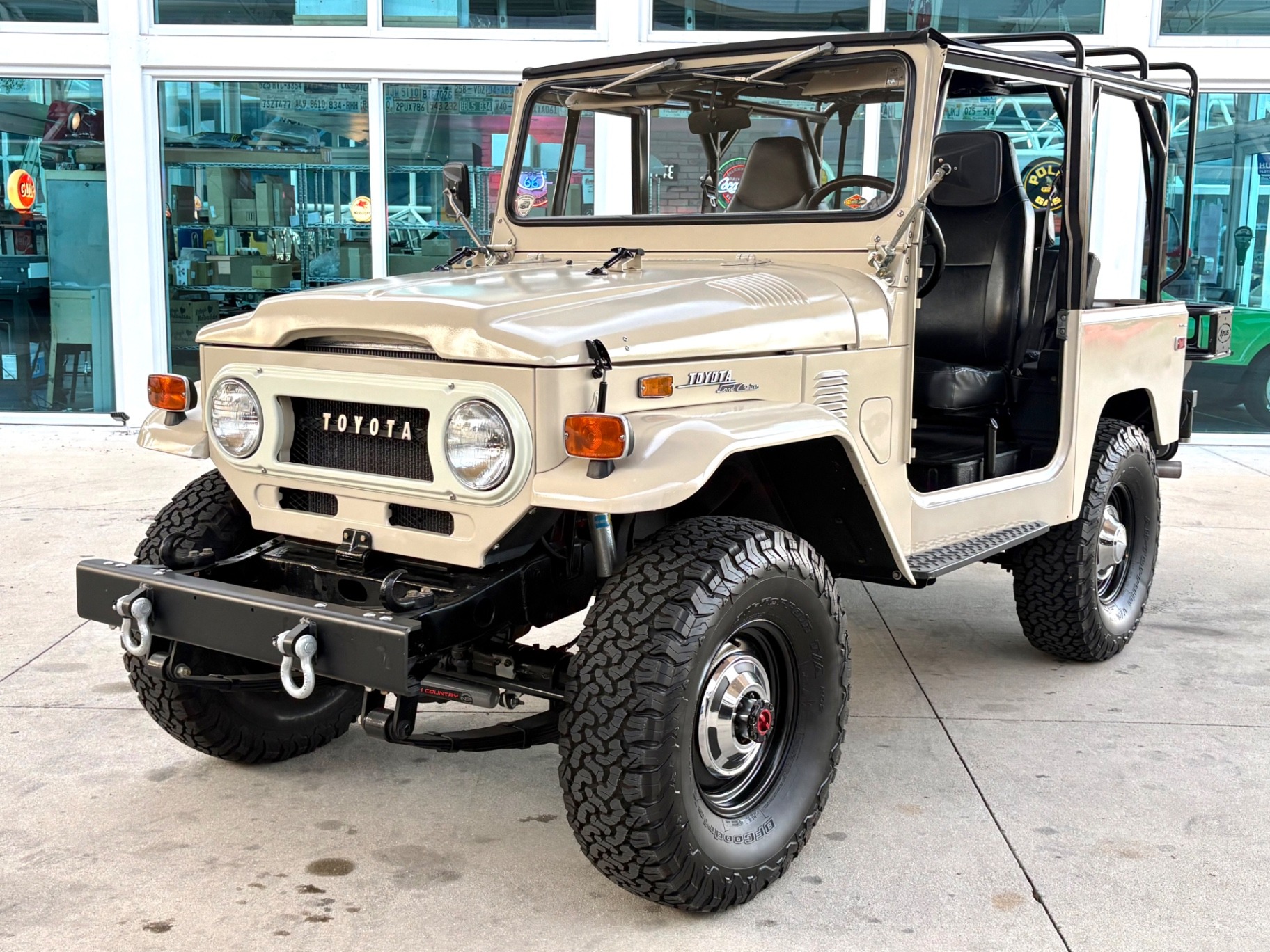
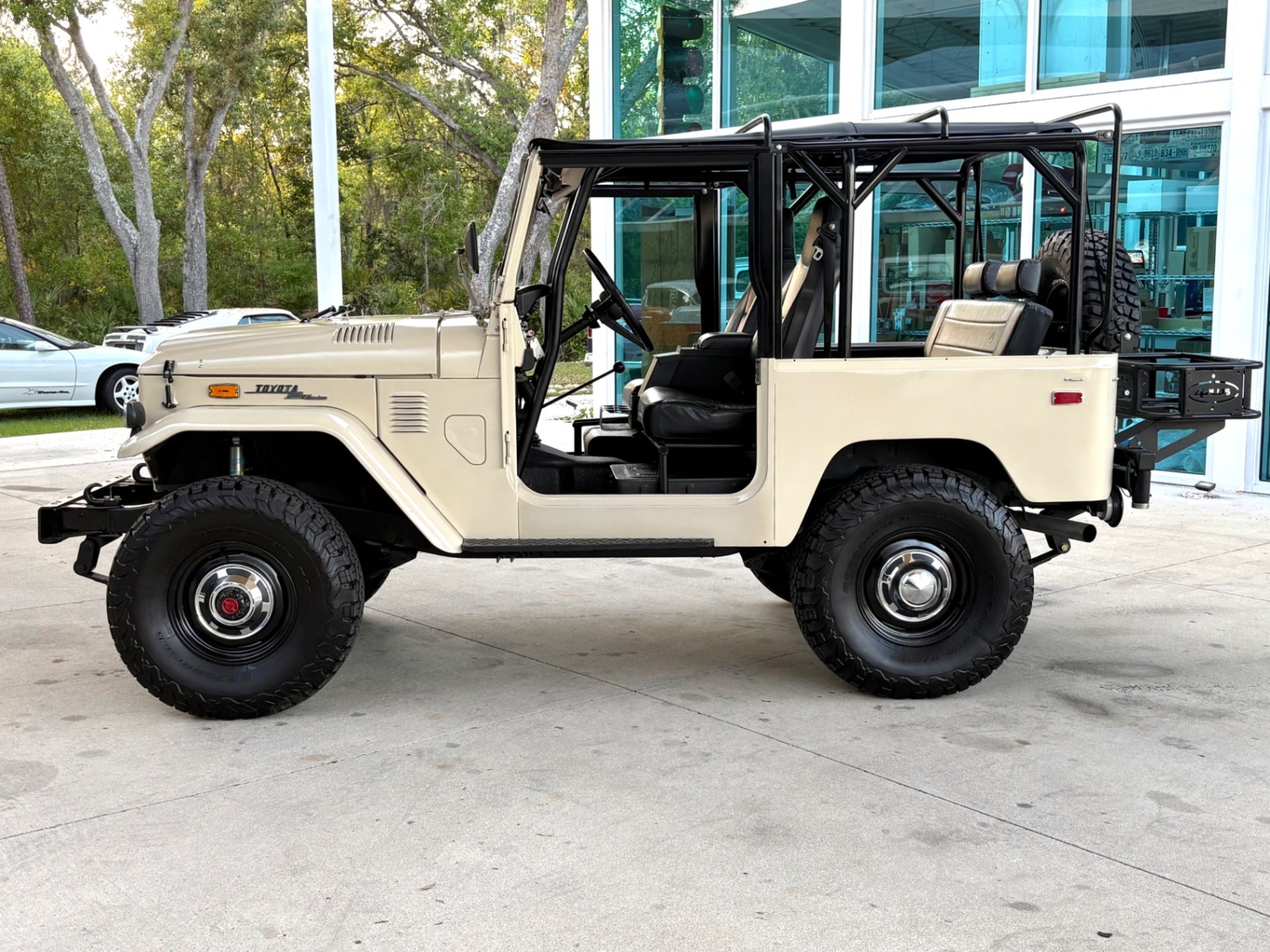
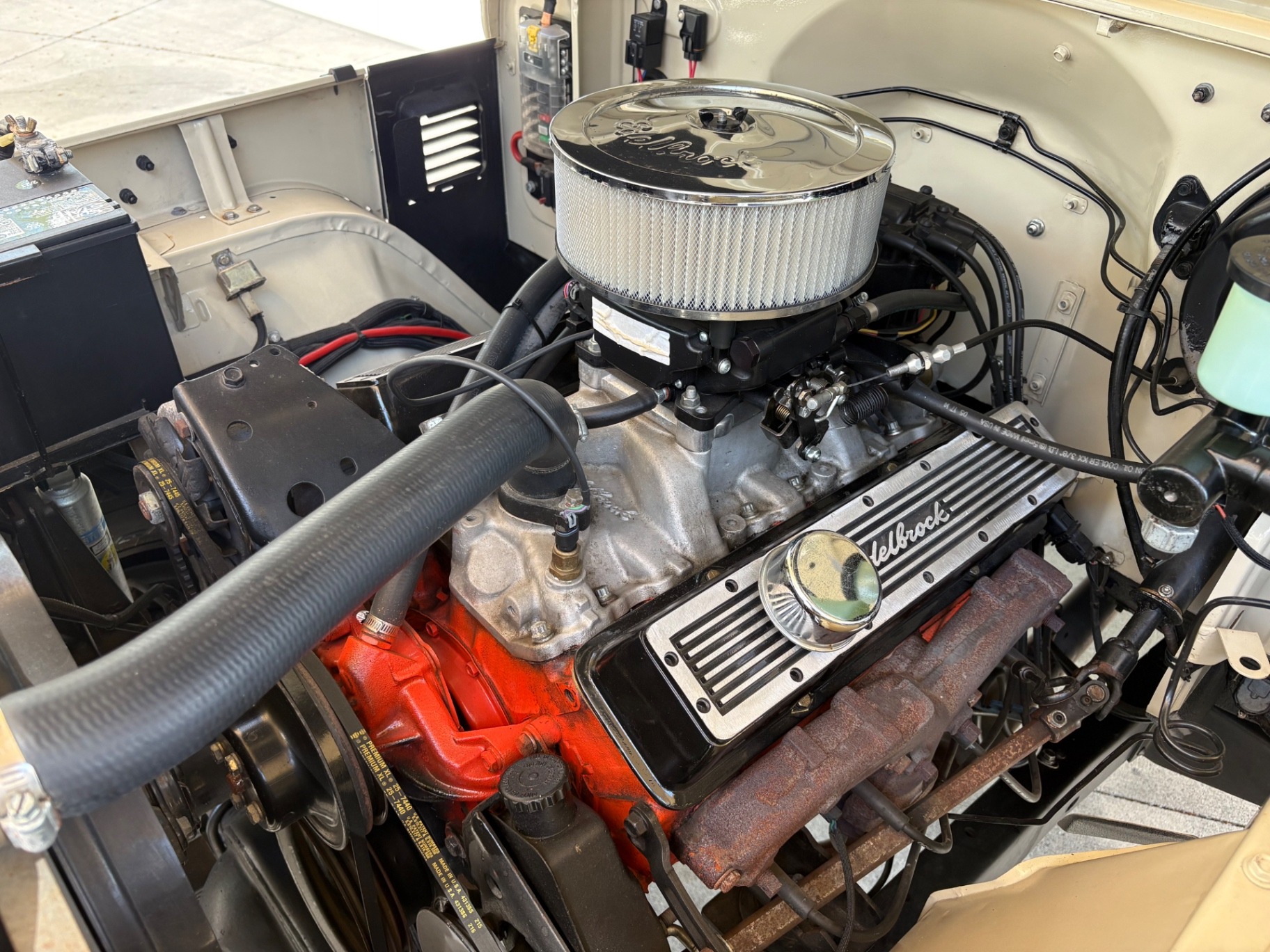
Restored 1972 Toyota Land Cruiser FJ40
$44,997
Year
1972Make
ToyotaModel
Land CruiserOdometer
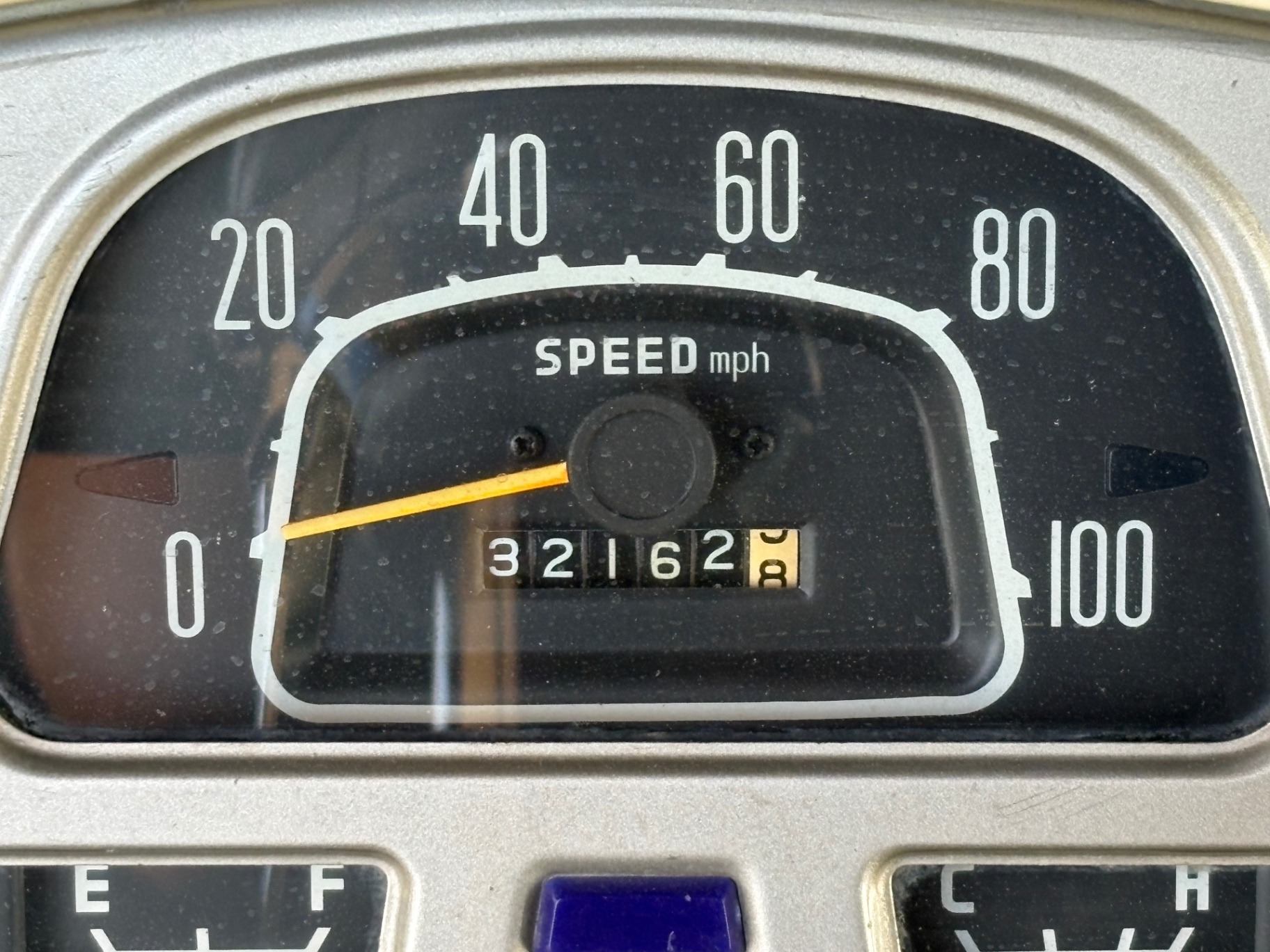
32,162Engine
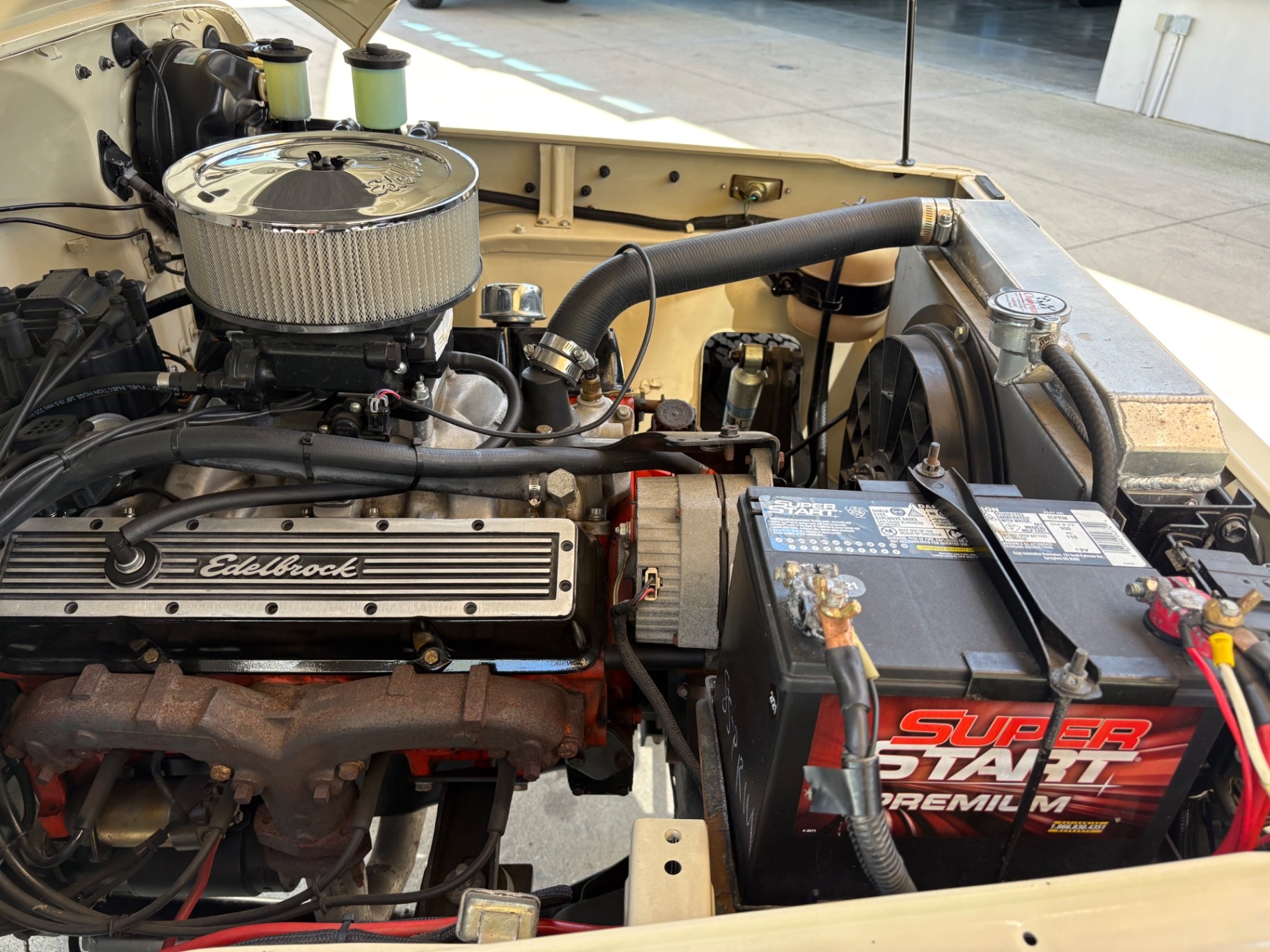
Chevrolet 350 ci. V8Fuel Type
gasolineTransmission
manualDrivetrain
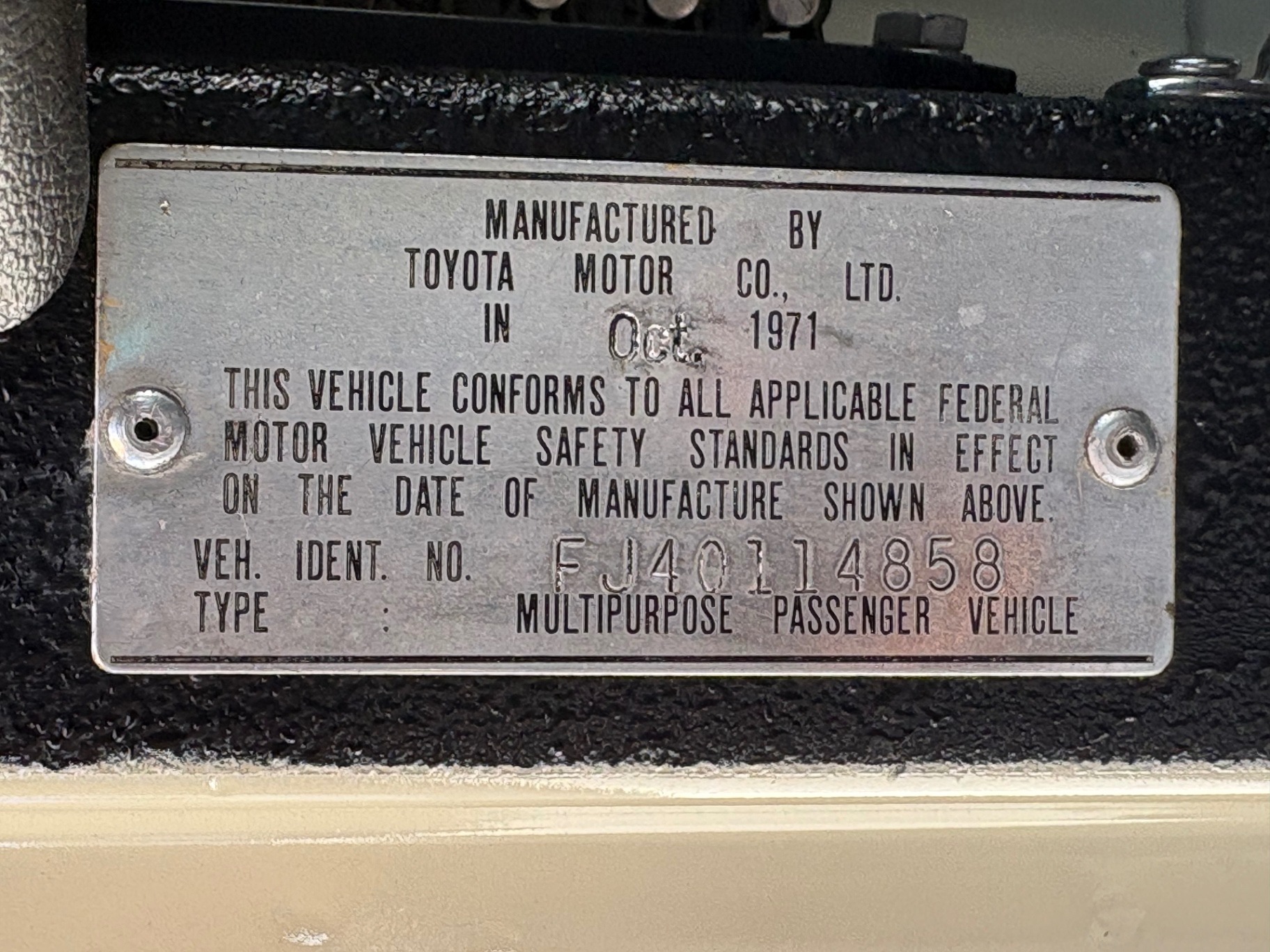
4×4VIN / Chassis #
FJ40114858Seller
Skyway ClassicsLocation
Bradenton, FLSeller Stock #
SN3306Title Status
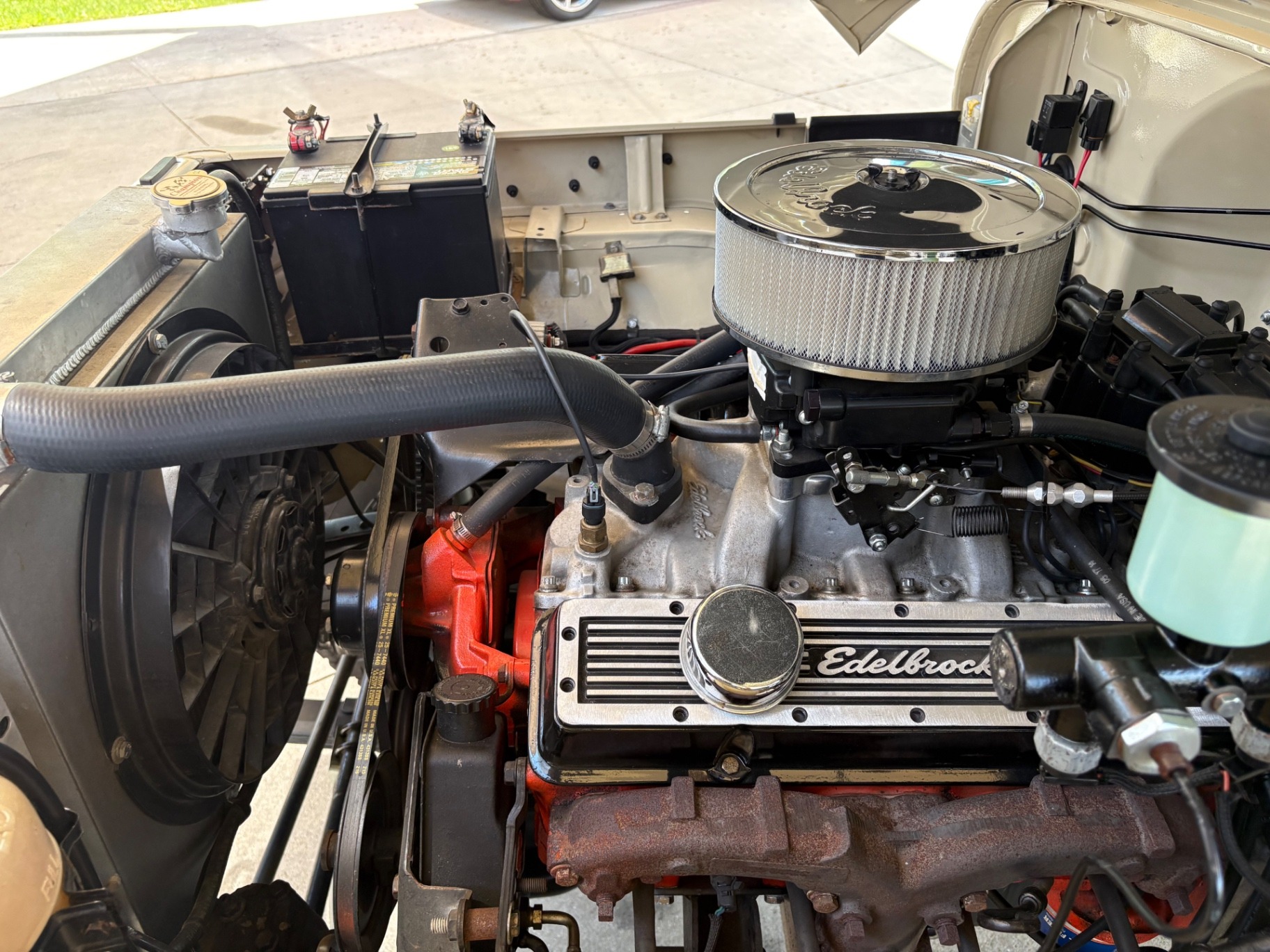
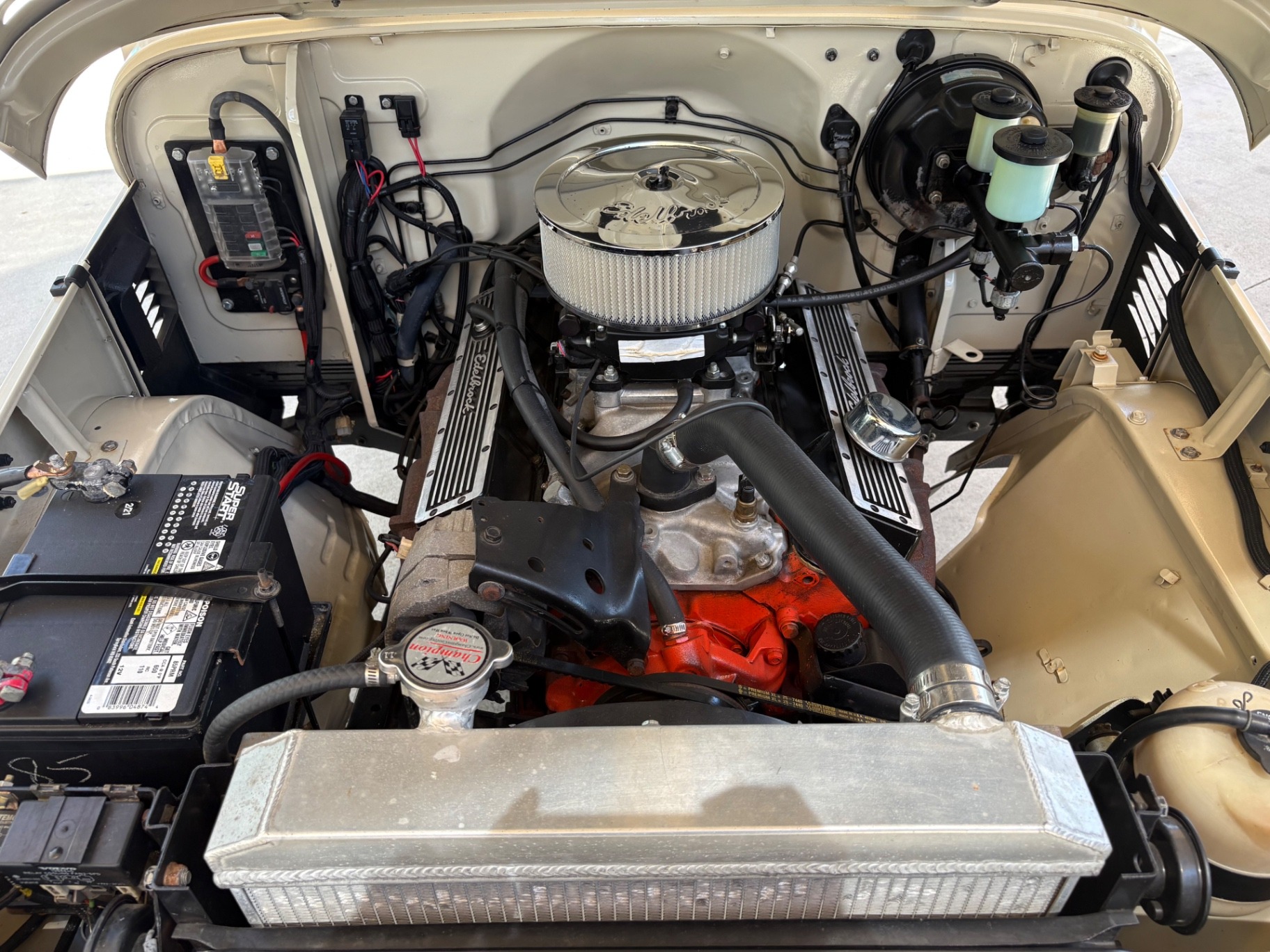
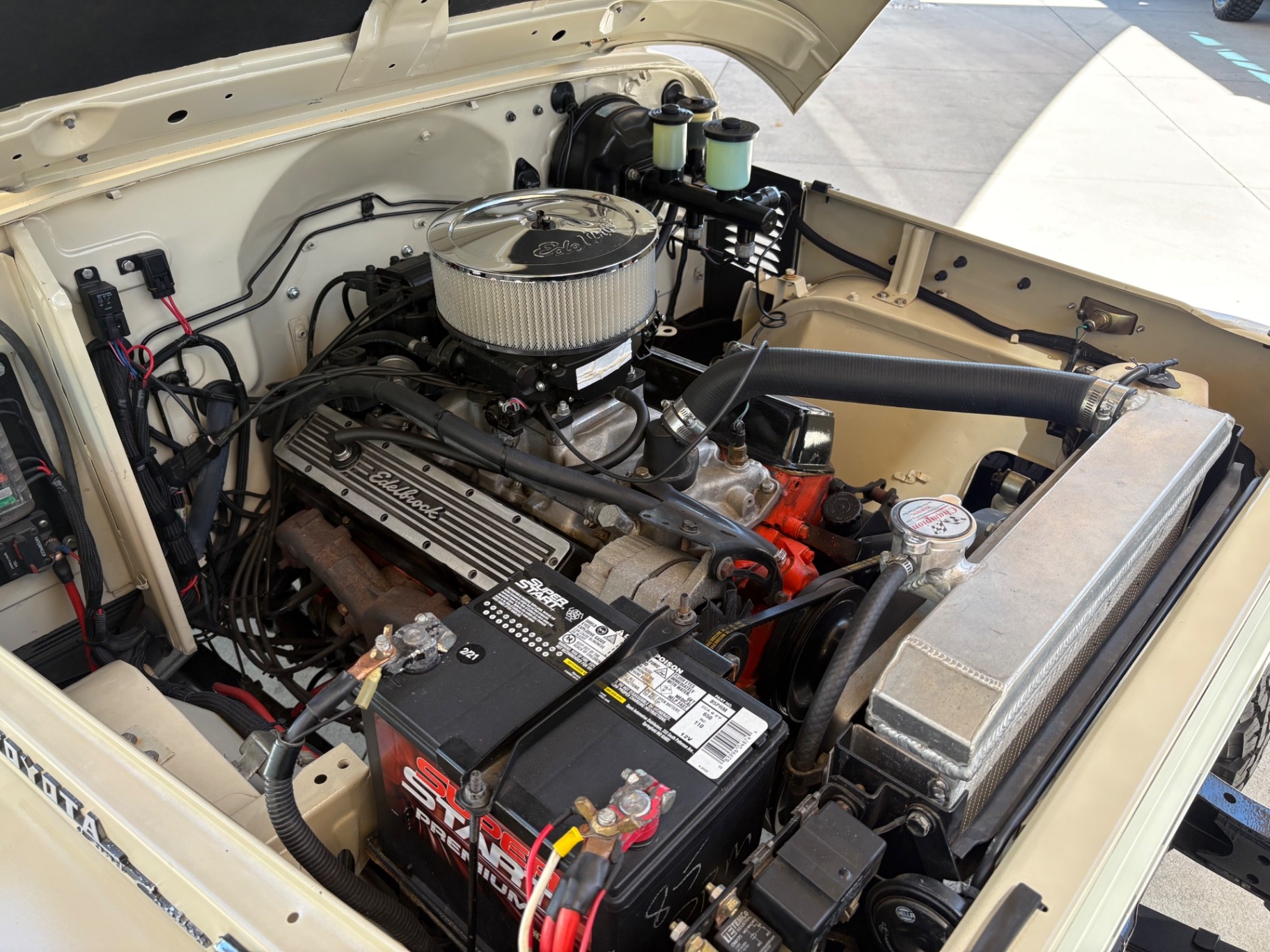
cleanThe FJ40 was produced from 1960 through 1984, with the early 1970s models widely regarded as the sweet spot of the generation. They had received enough refinement to be usable on the street but had not yet been softened for a mass market. The inline-six engine Toyota used from the factory was known for durability, though it was not known for power. That is exactly why the Chevy 350 swap has been one of the most popular and well-documented modifications in the FJ40 community for decades. When done properly, it transforms the driving experience without compromising the vehicle's core character.
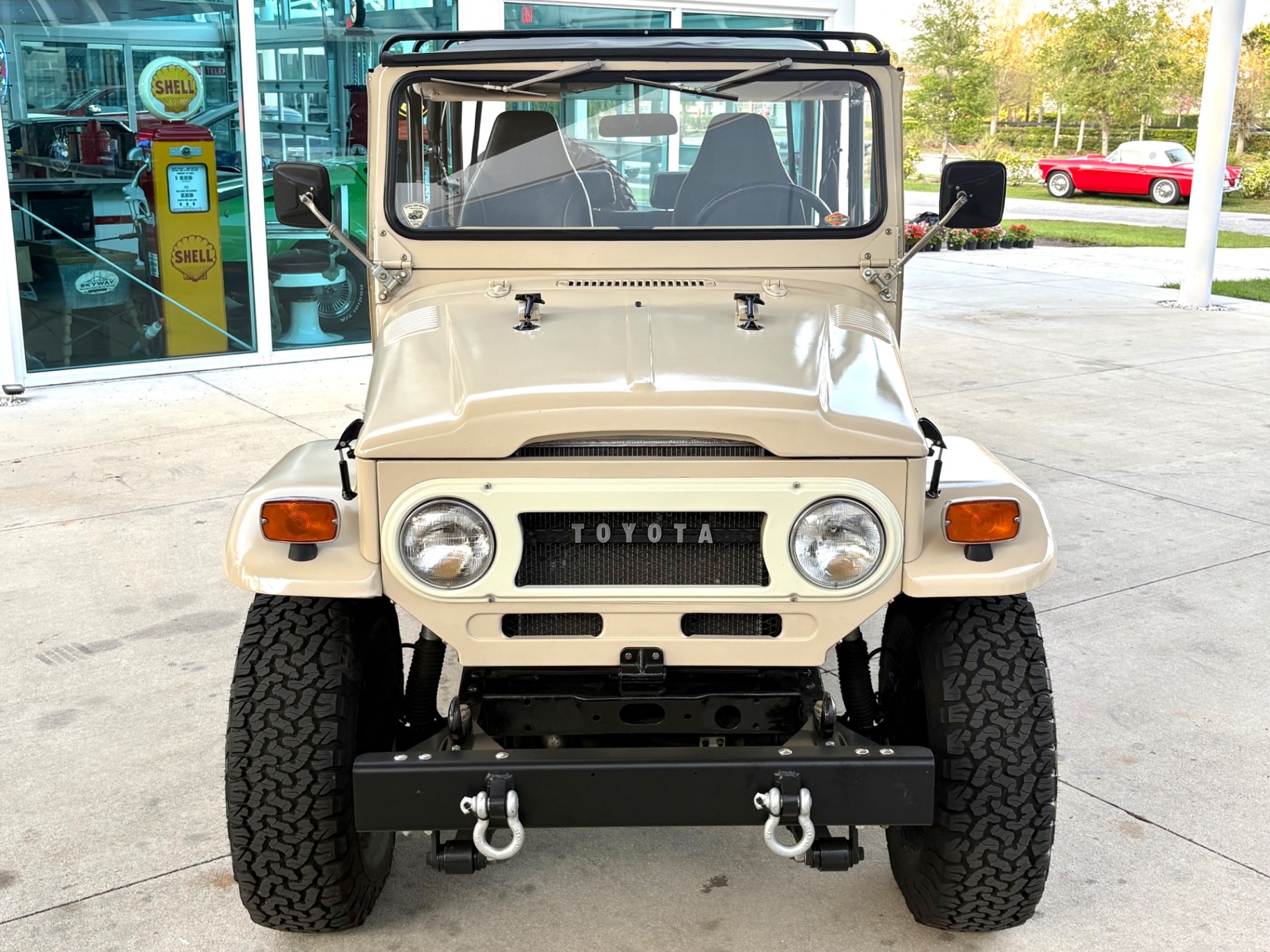
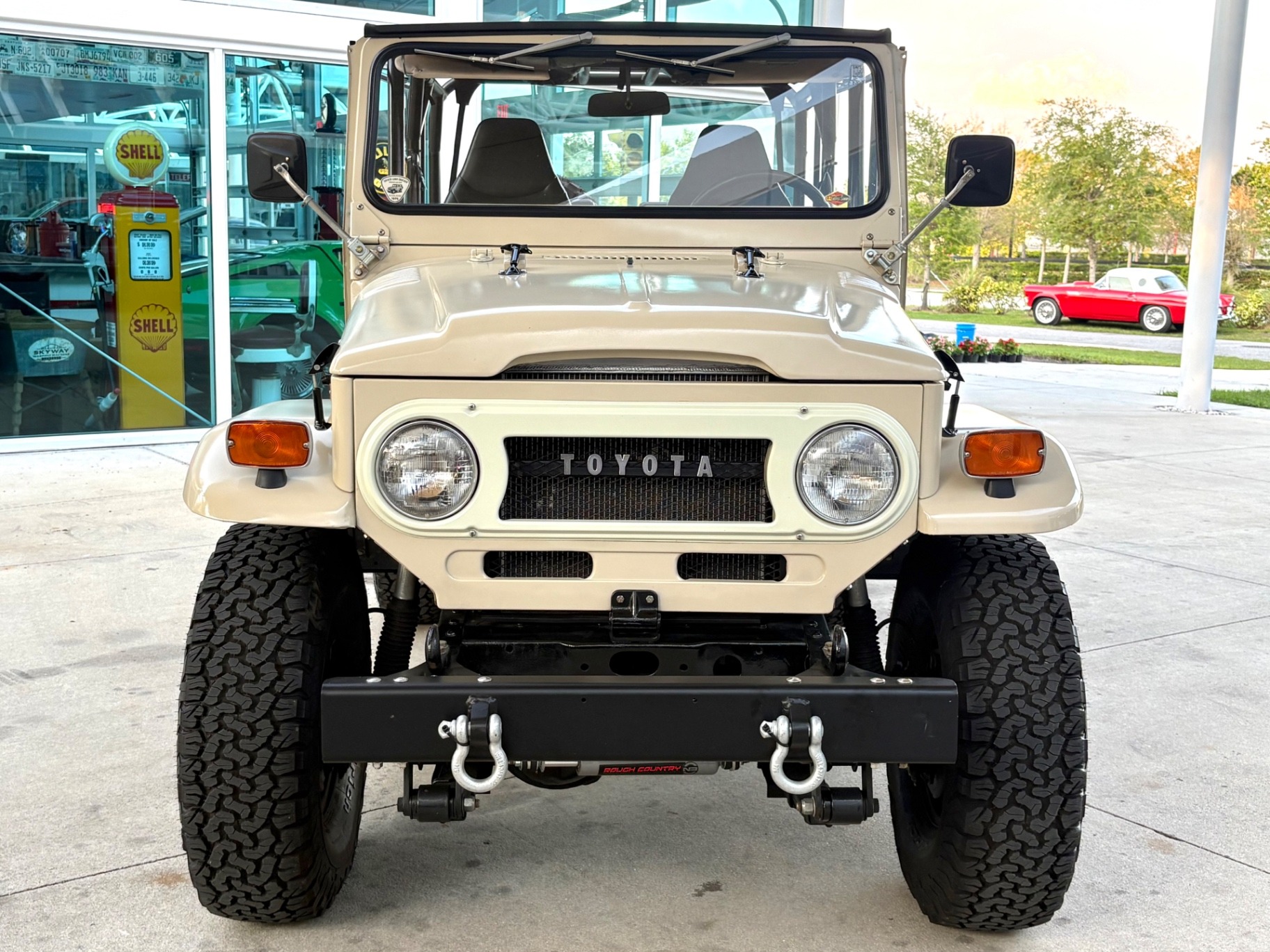
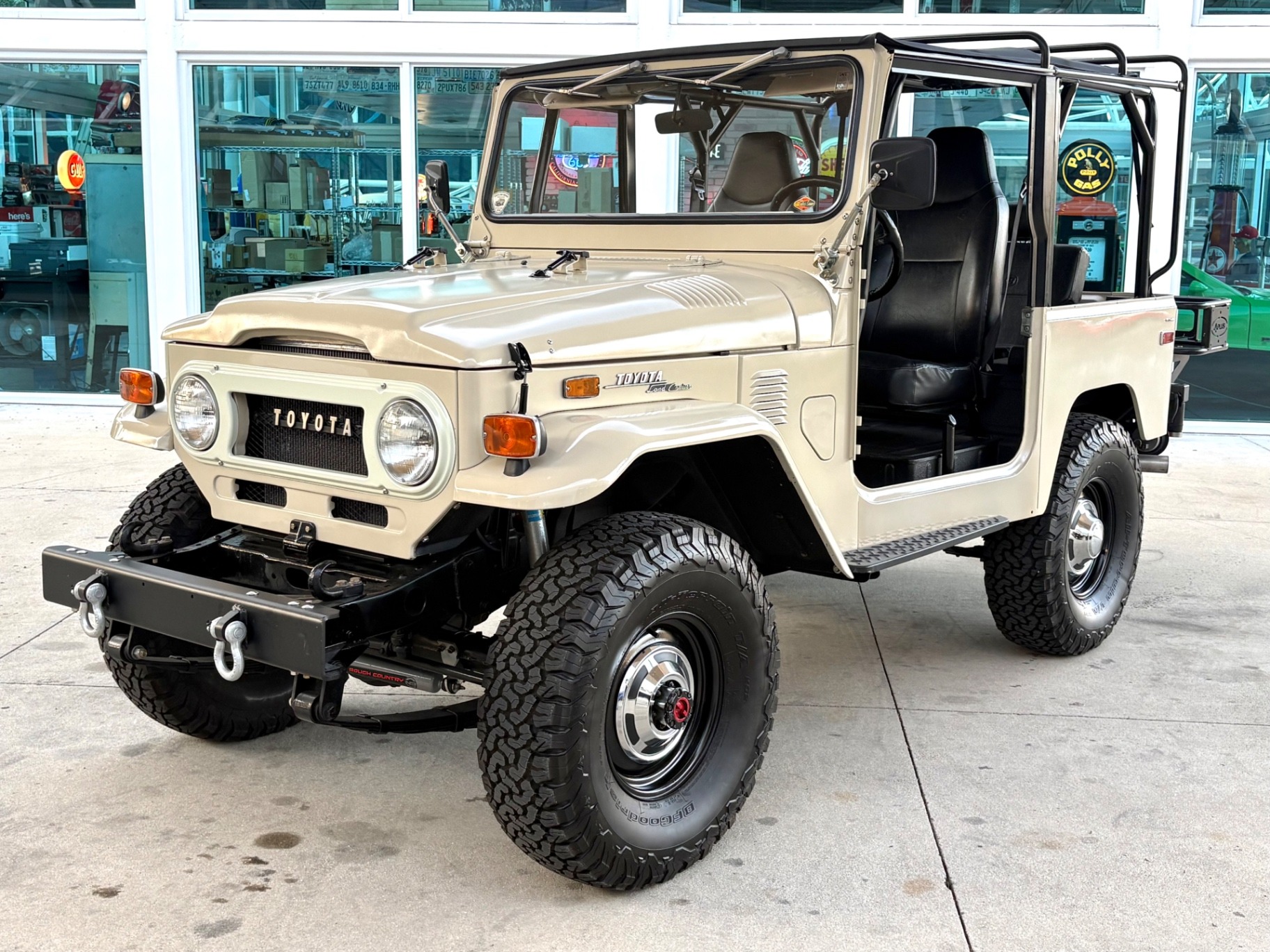
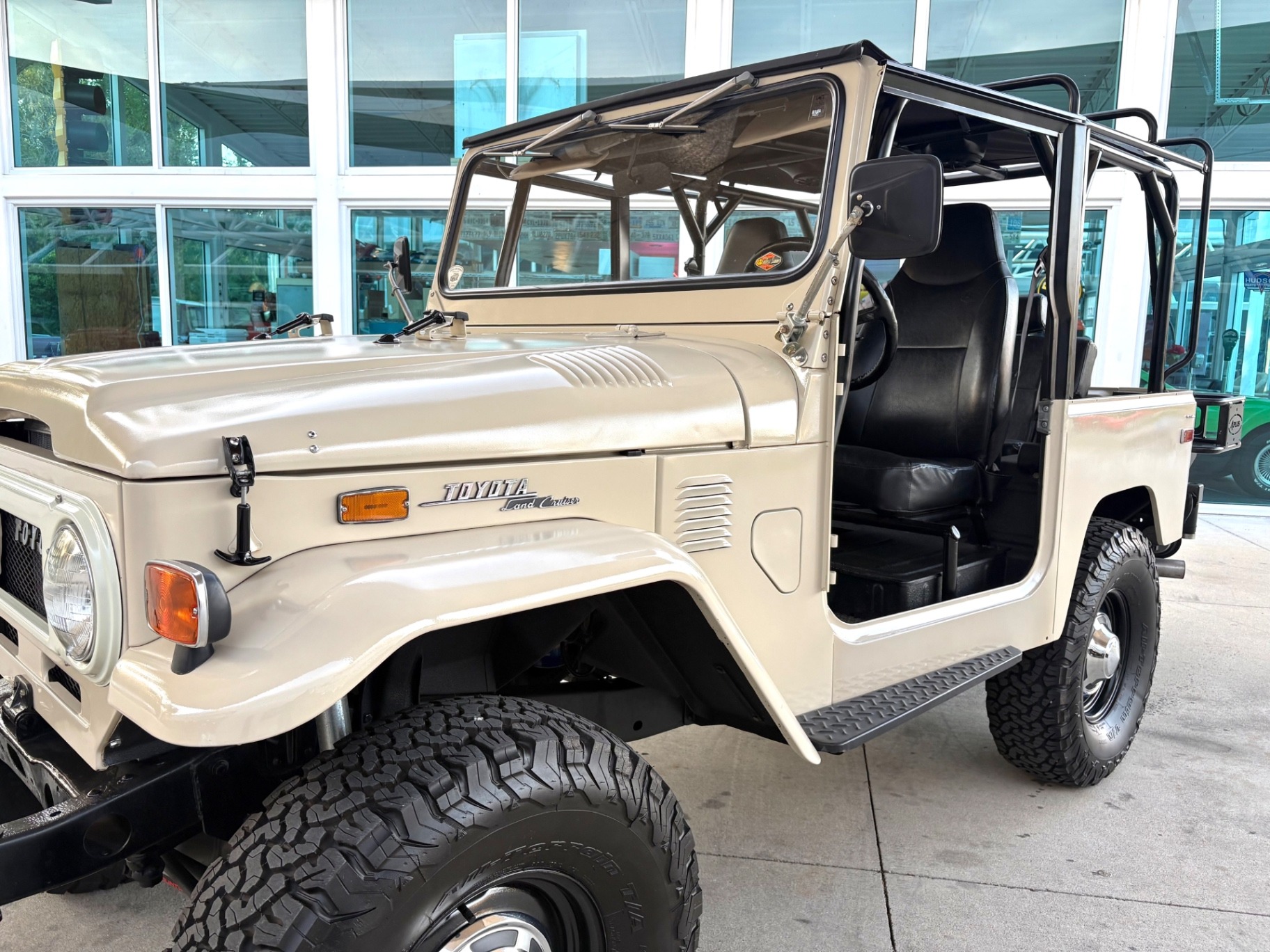
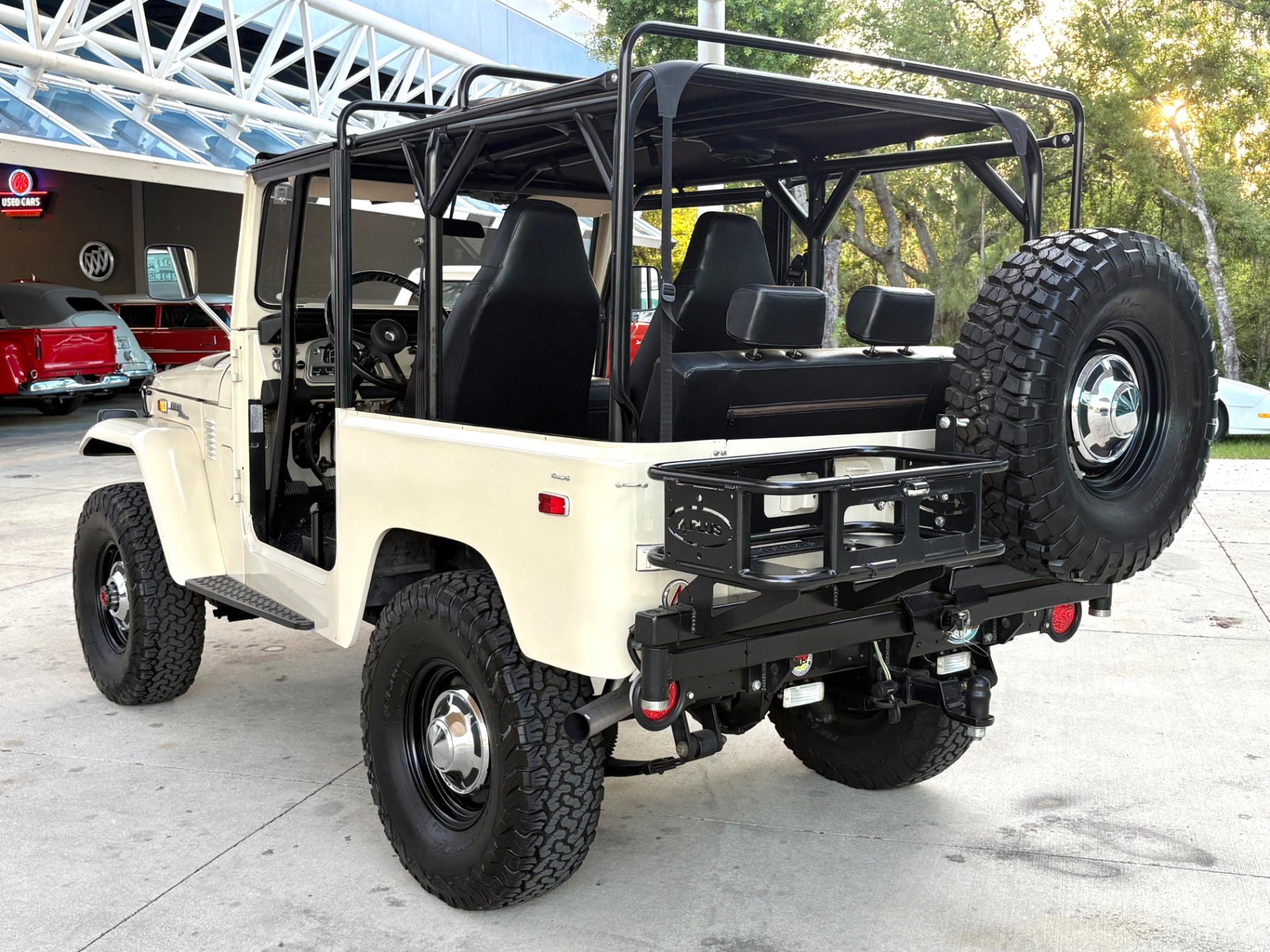
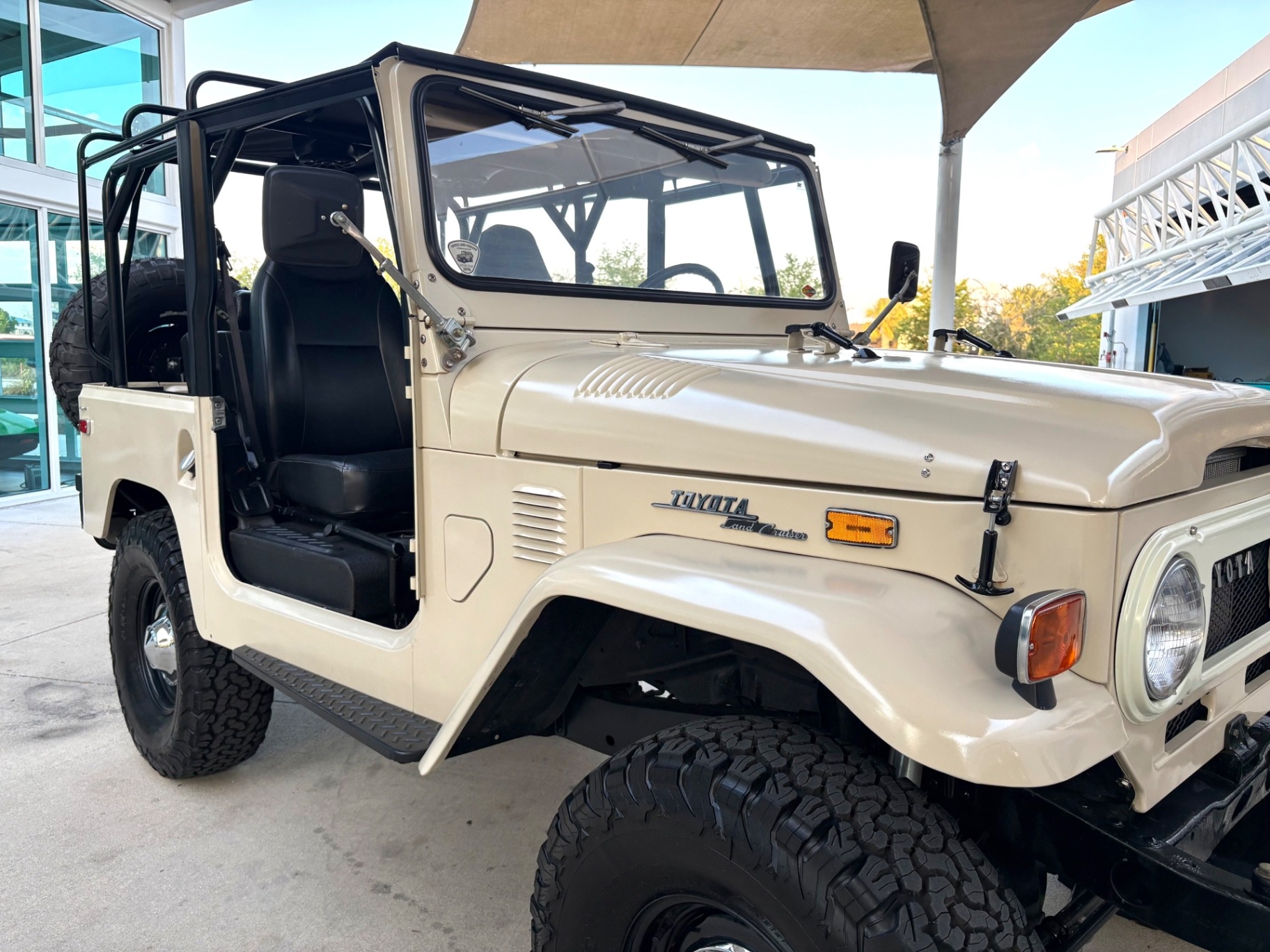
This particular 1972 Toyota FJ40 was treated to a full frame-off restoration and restomod build — not a weekend project, but a comprehensive disassembly and rebuild with documented upgrades at every level. The VIN confirms this is an early-production FJ40 short-wheelbase model, the configuration most collectors and enthusiasts actively seek. At approximately 20,000 miles on the rebuilt drivetrain, this is a truck you can drive hard or display with confidence.
Features List
Mechanical
What separates this build from a basic carbureted swap is the Holley Sniper throttle body fuel injection system. The Sniper replaces a traditional carburetor with a self-tuning EFI unit that uses a closed-loop oxygen sensor to optimize the air-fuel mixture in real time. The practical result is reliable cold starts, consistent power delivery across a wide RPM range, and better fuel economy than a carbureted setup of equivalent displacement. For a vehicle that may see both highway miles and trail use, that matters. There is no choke to manage, no float bowl to adjust for temperature, and no stumble on steep inclines where fuel slosh would starve a carburetor.
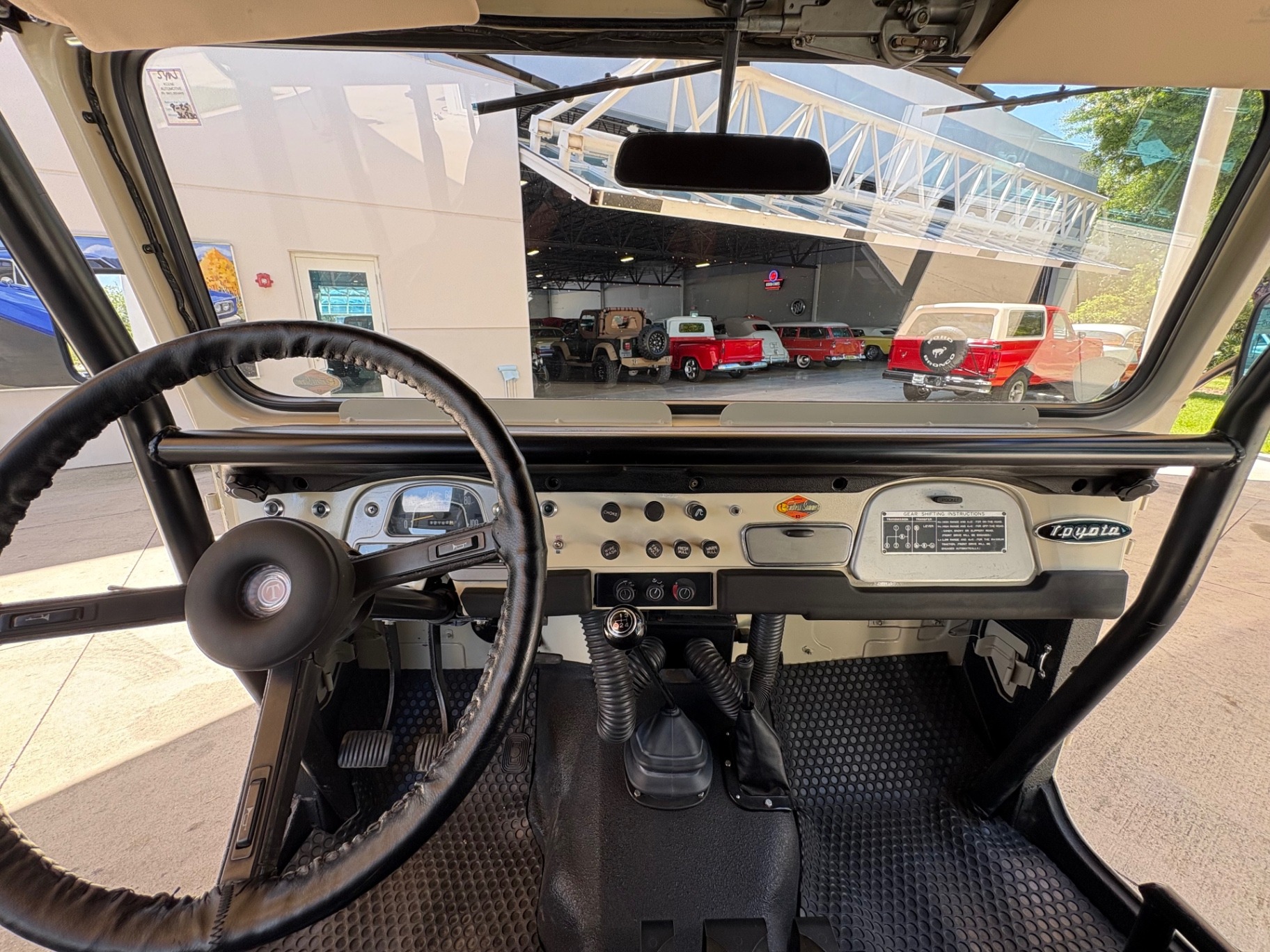
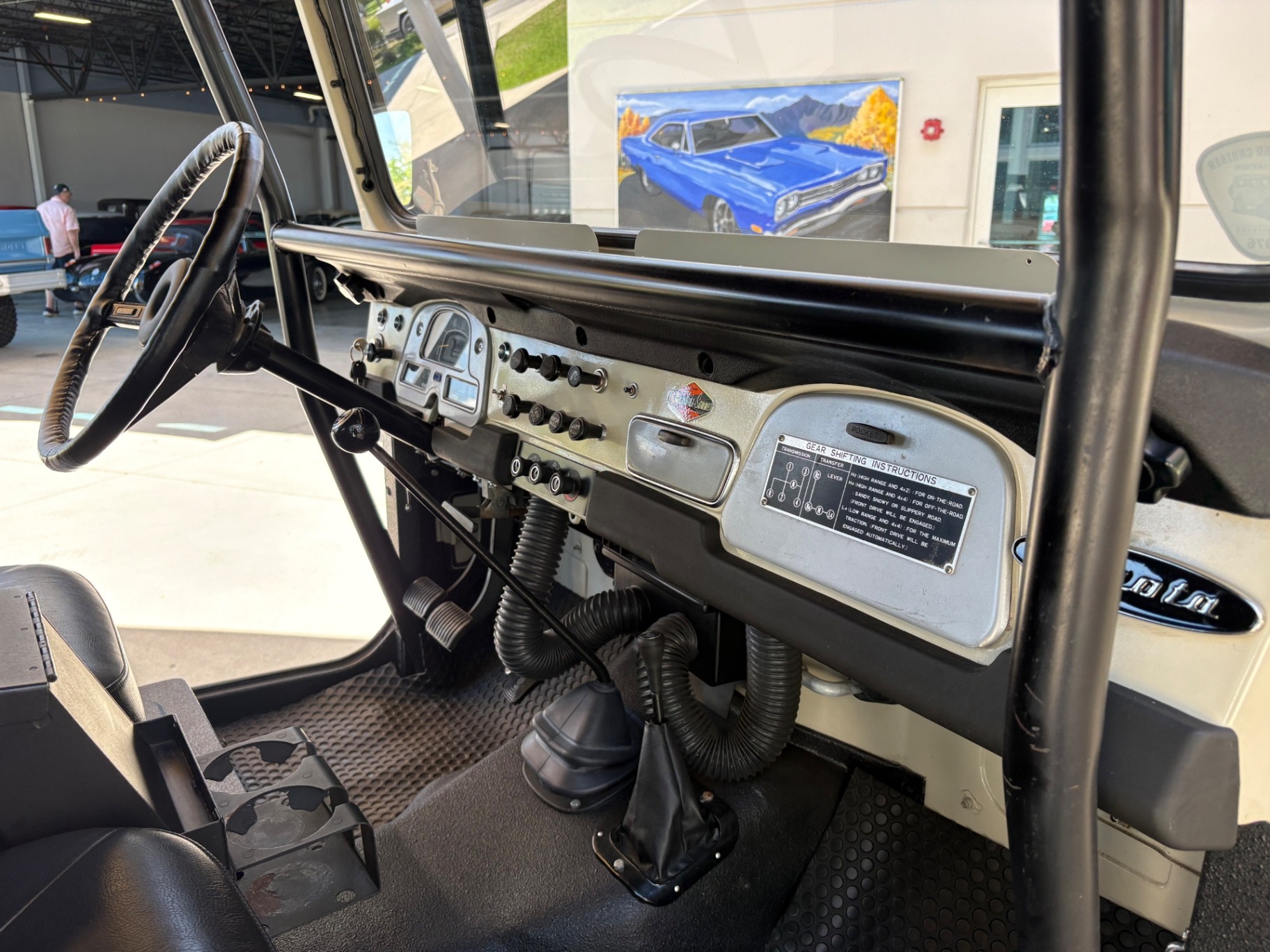
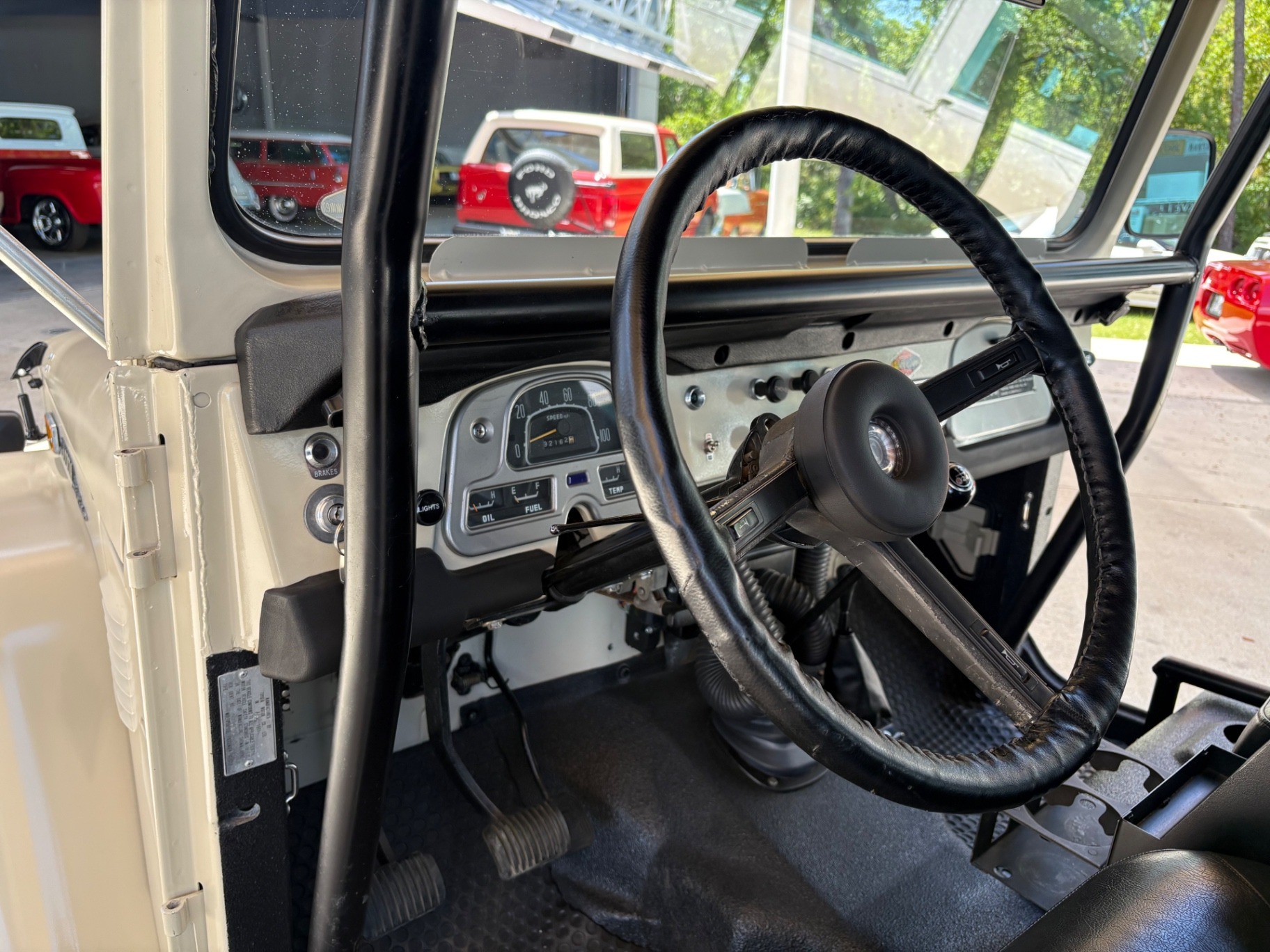
The 4-speed manual transmission keeps the driver connected to the drivetrain in a way an automatic simply does not, and the 2-speed transfer case provides the low-range gearing needed for technical off-road use. Front disc brakes are a meaningful upgrade over the original drum setup — better heat dissipation and more consistent pedal feel, particularly important given the added power of the V8. Power steering reduces the arm fatigue that was a well-known characteristic of the original FJ40 steering setup, especially on 35-inch tires.
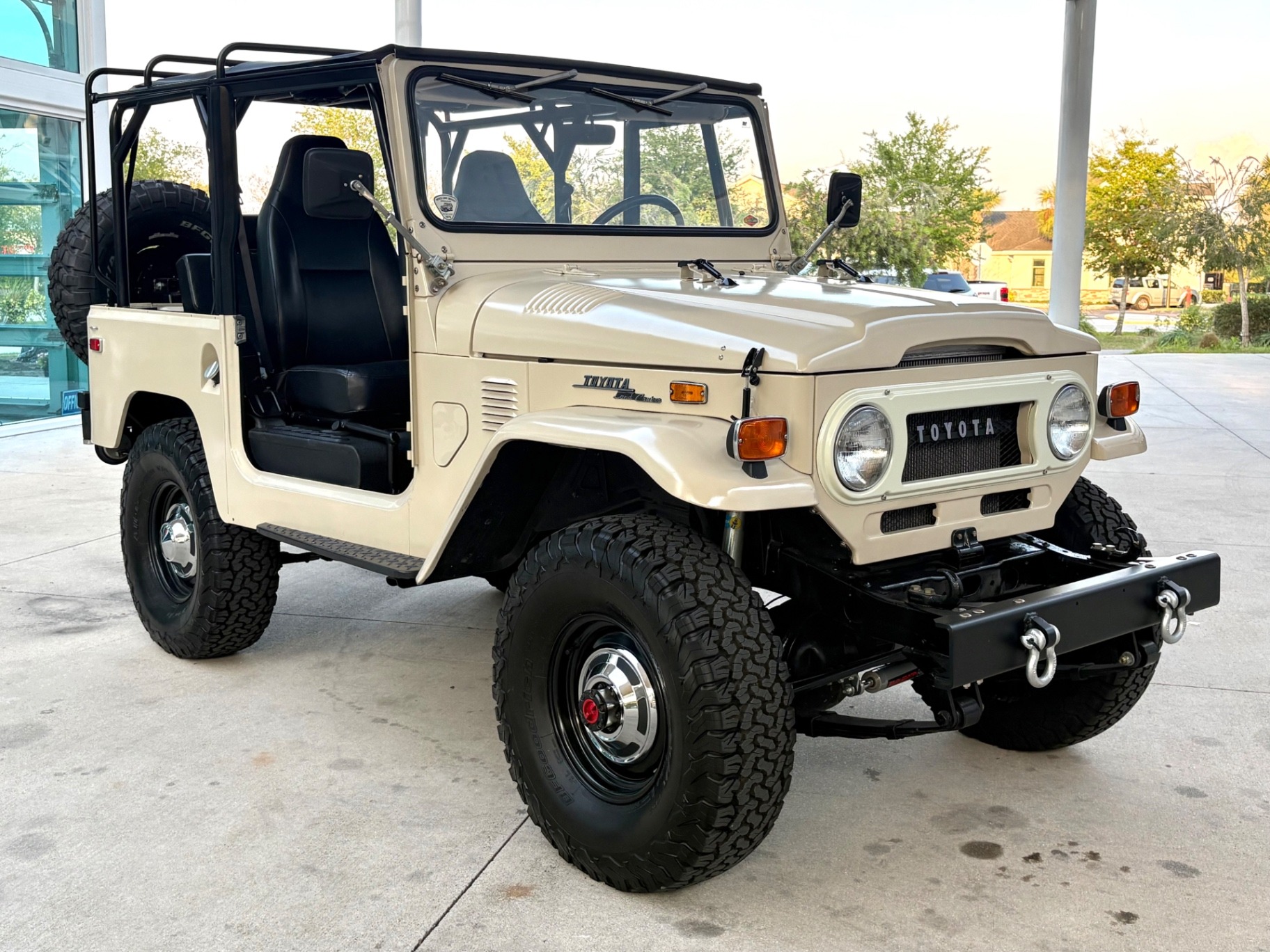
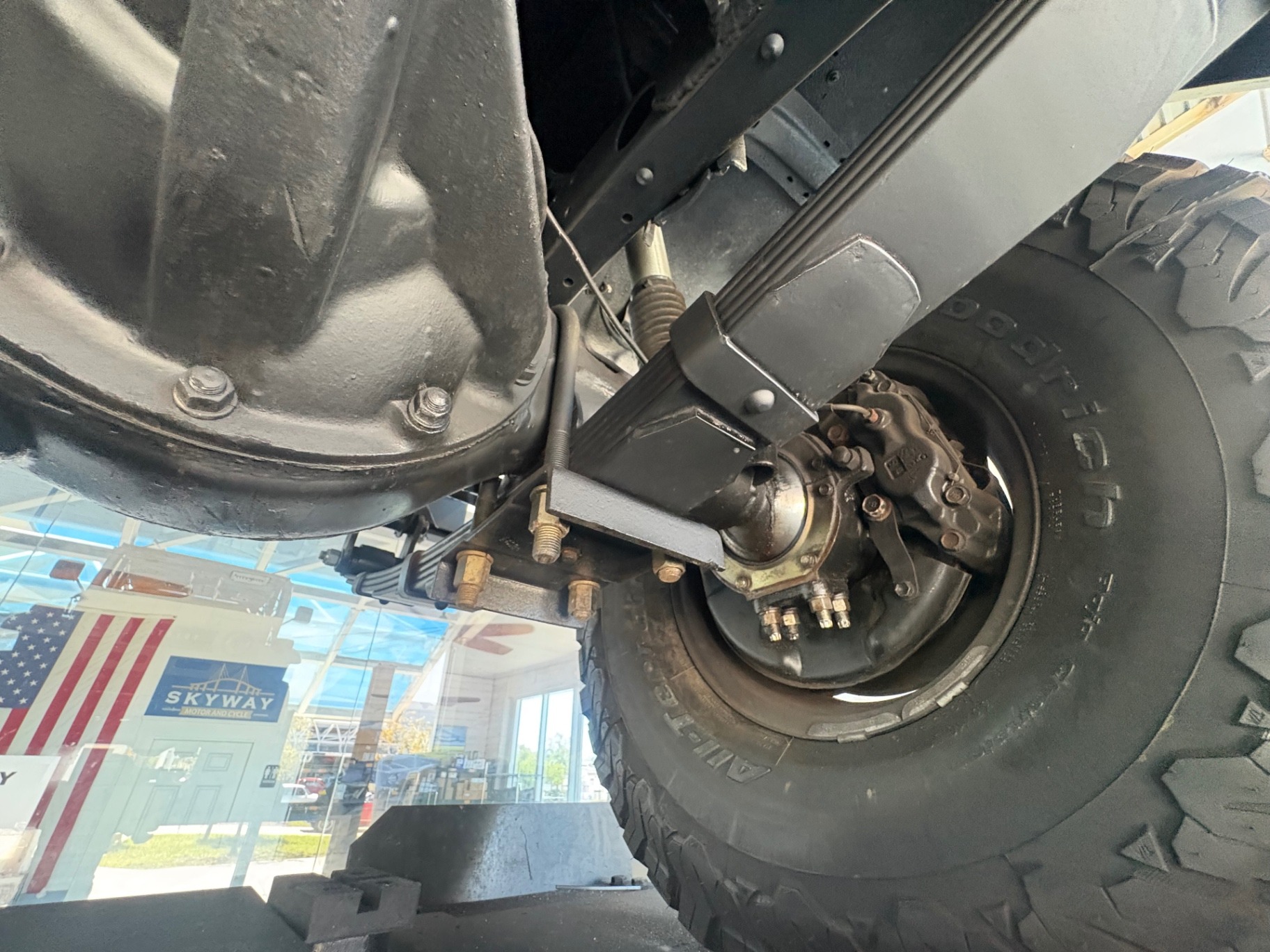
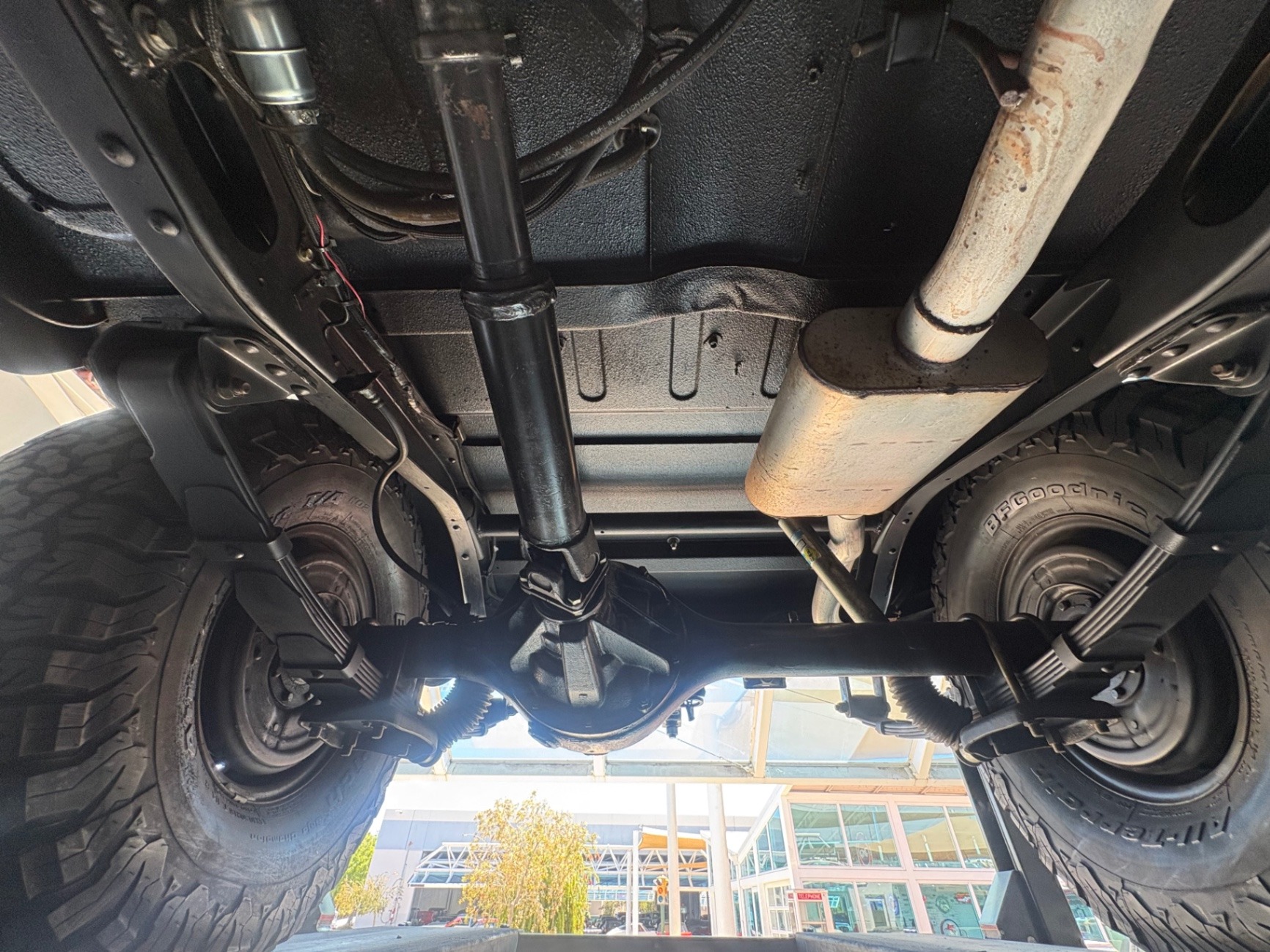
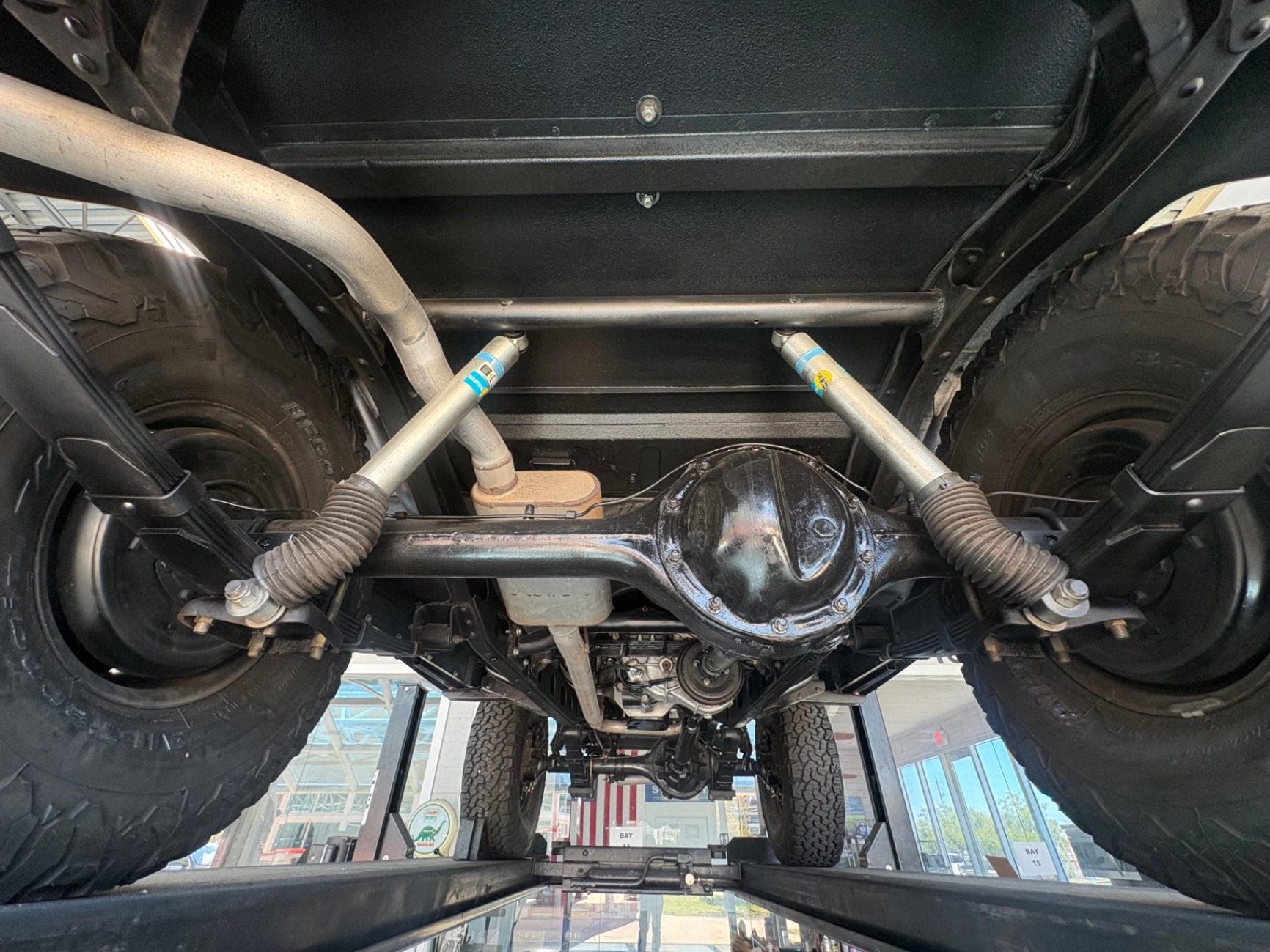
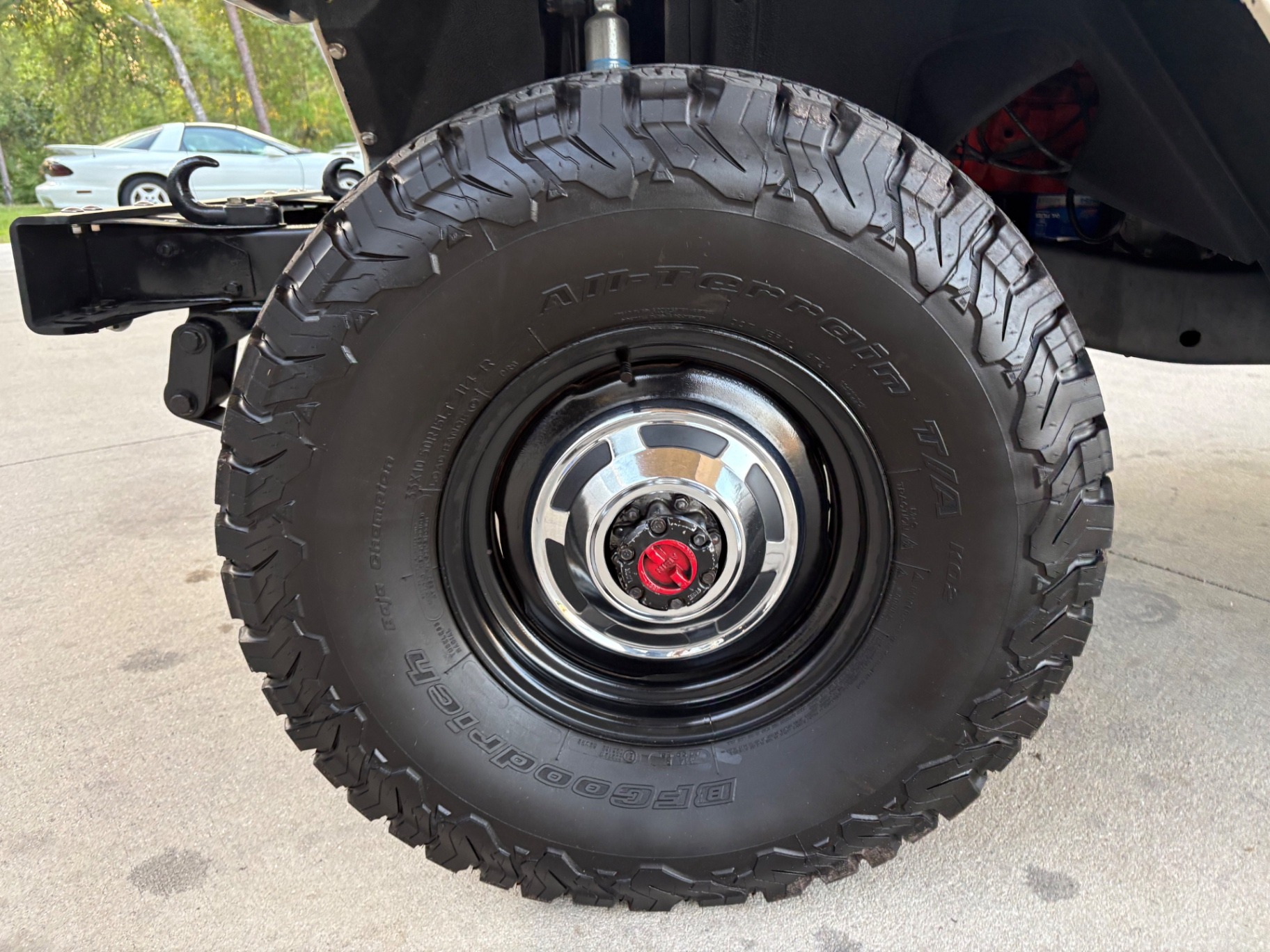
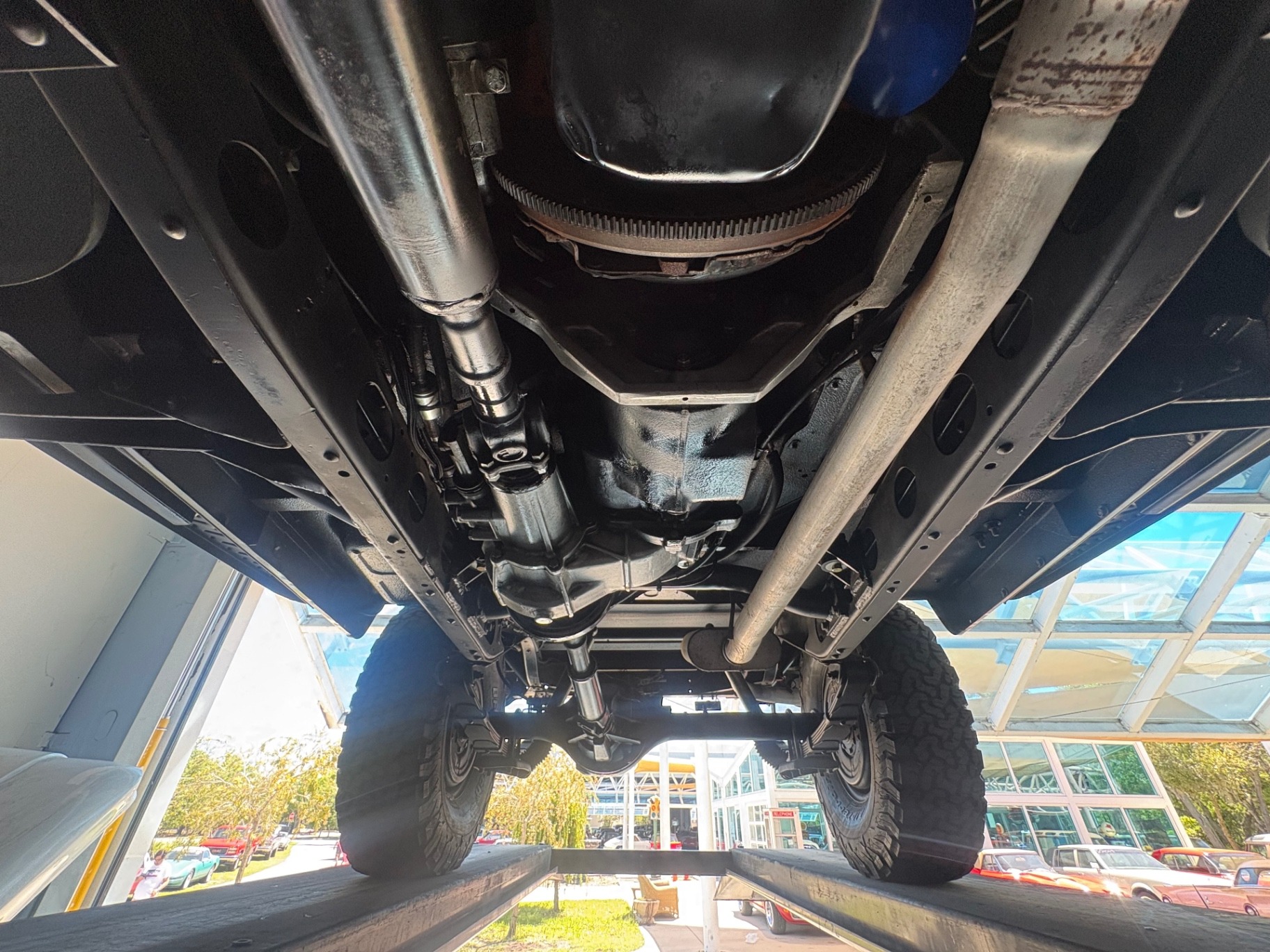
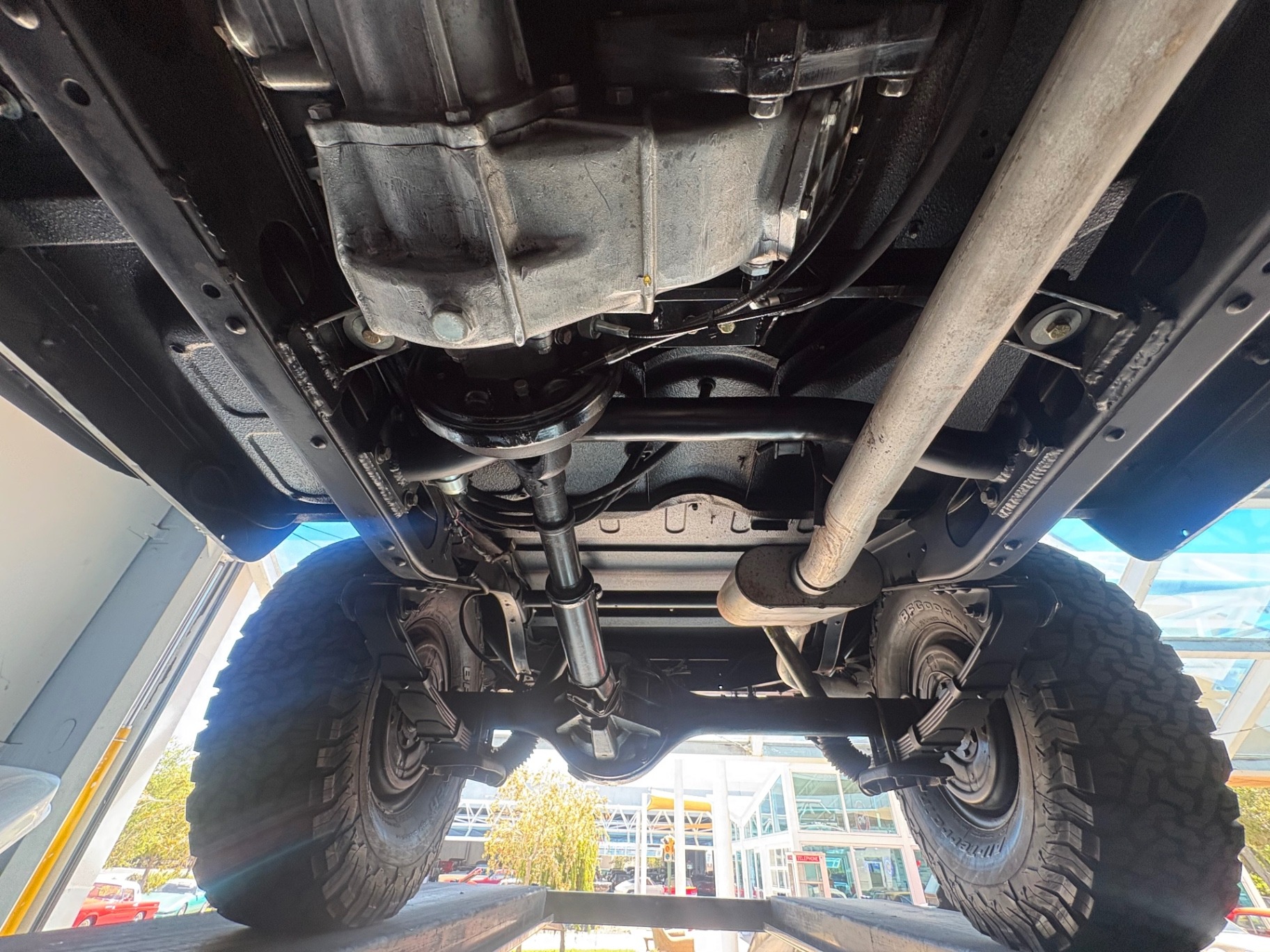
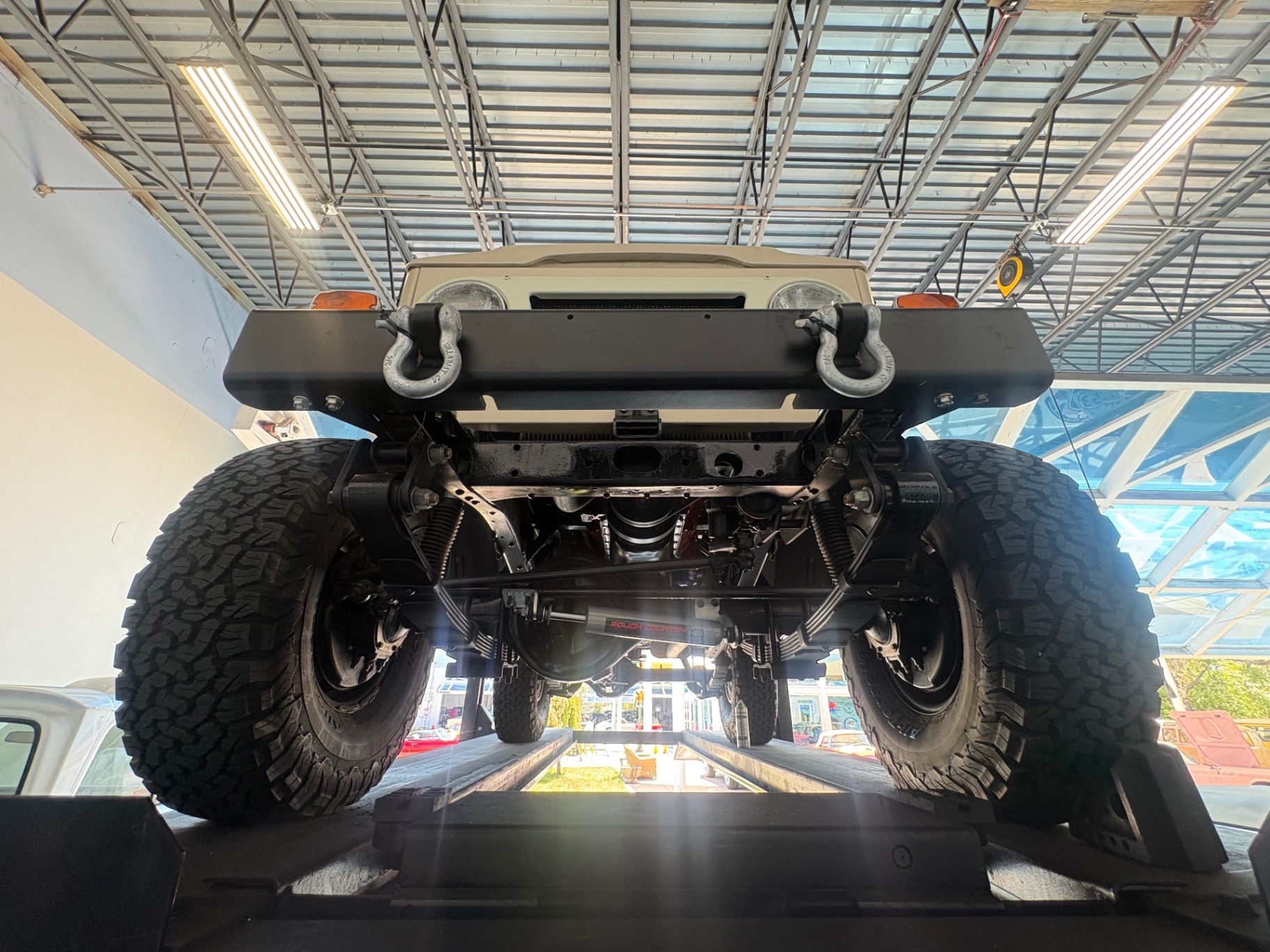
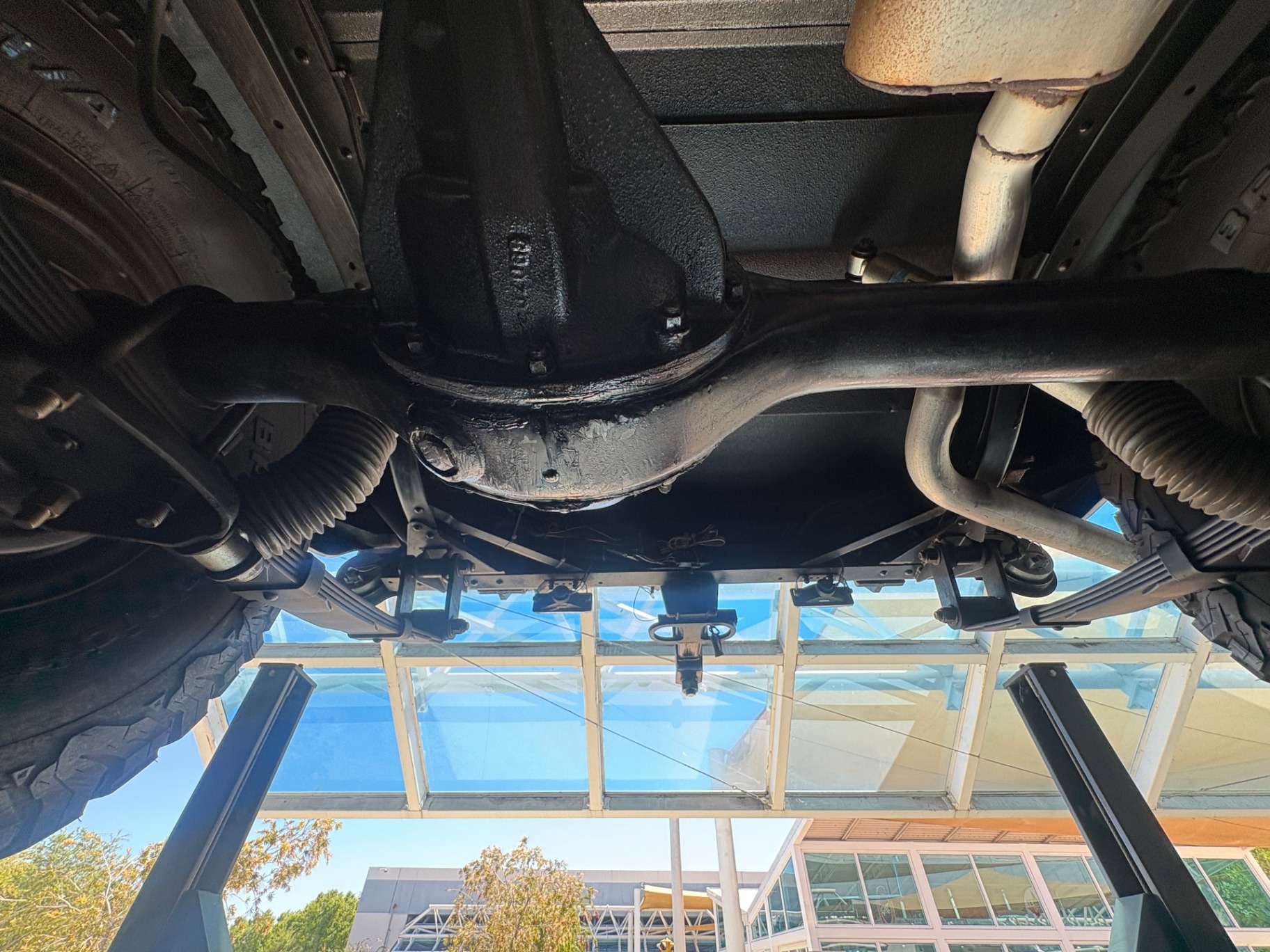
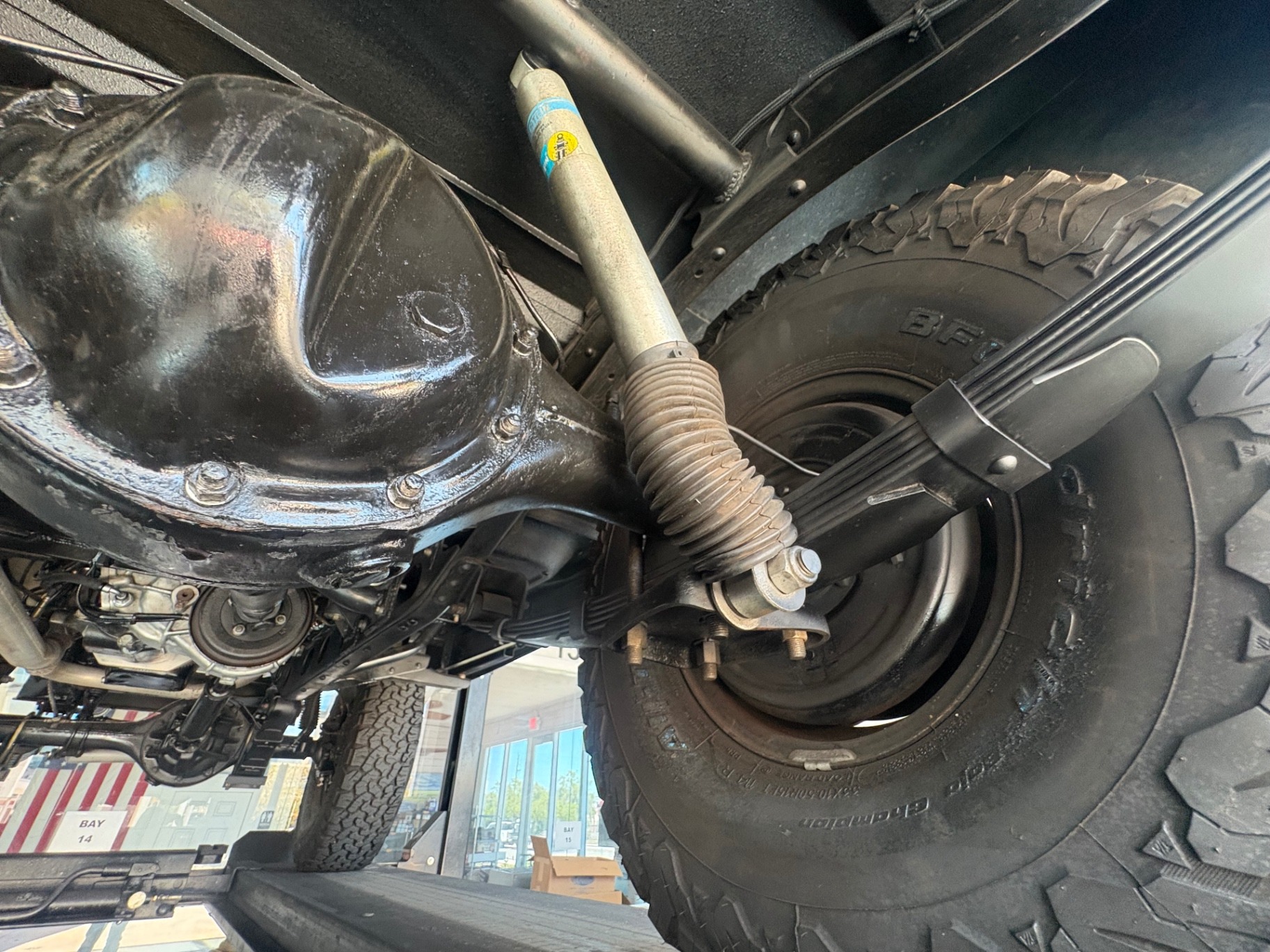
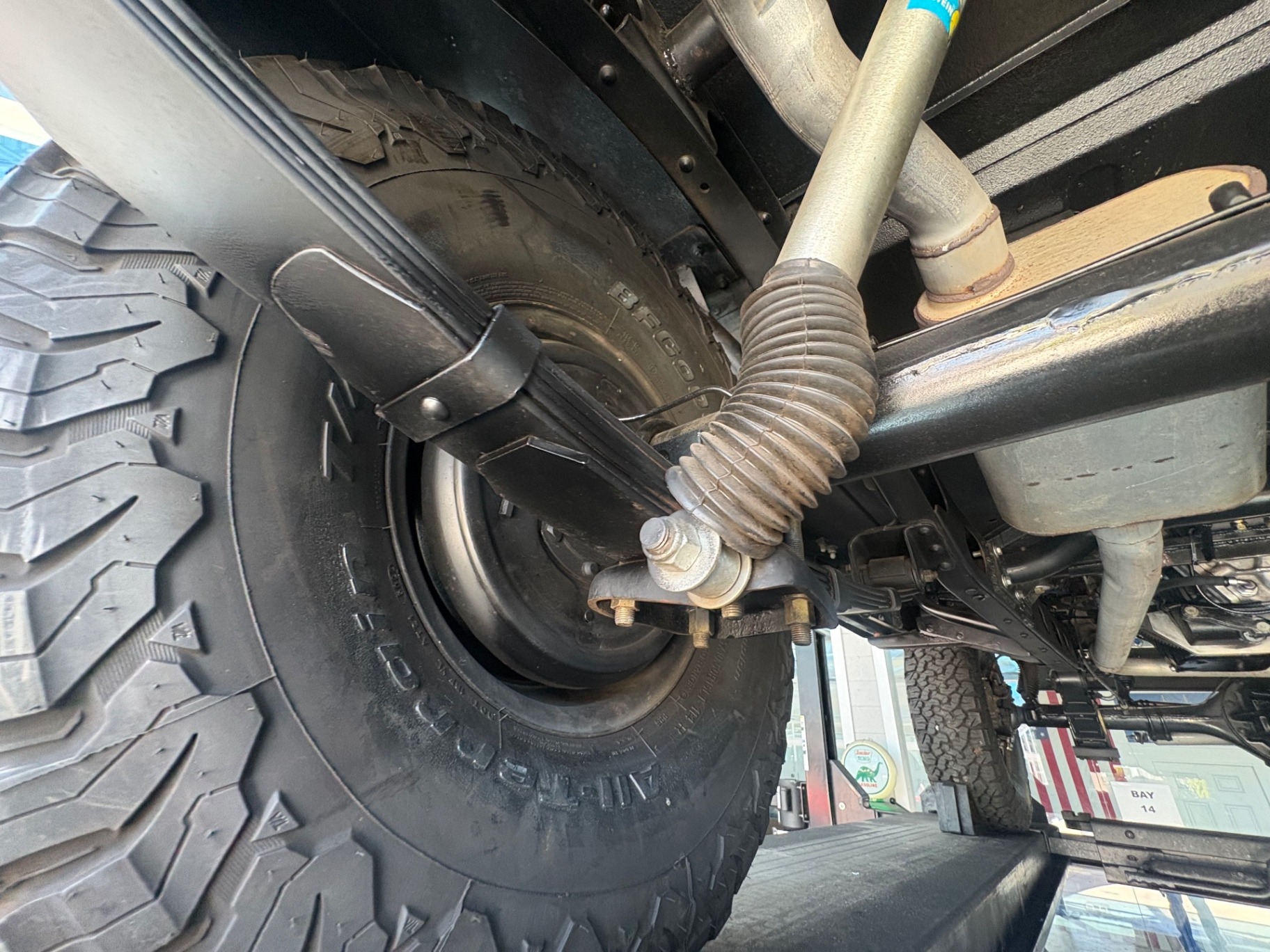
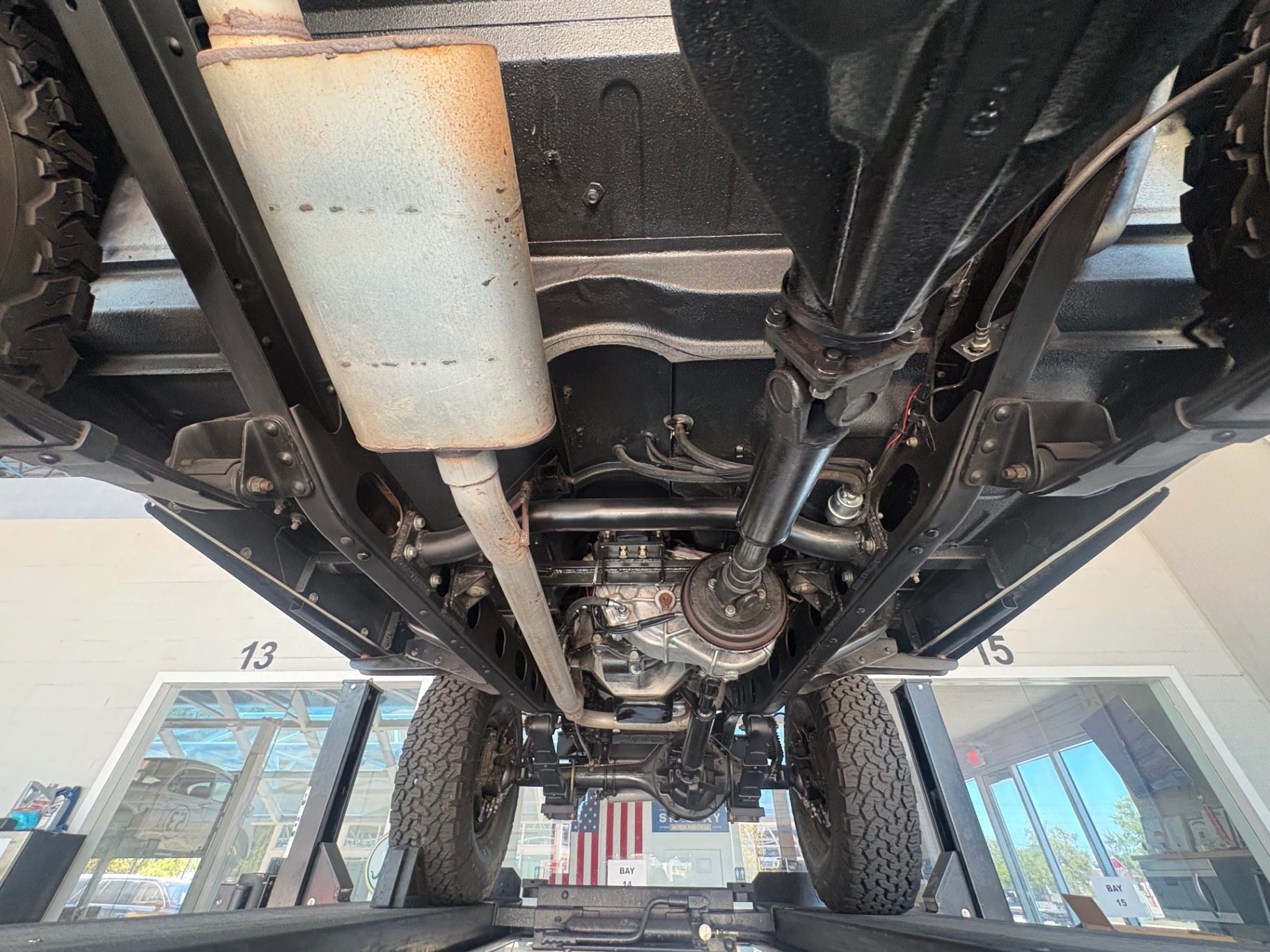
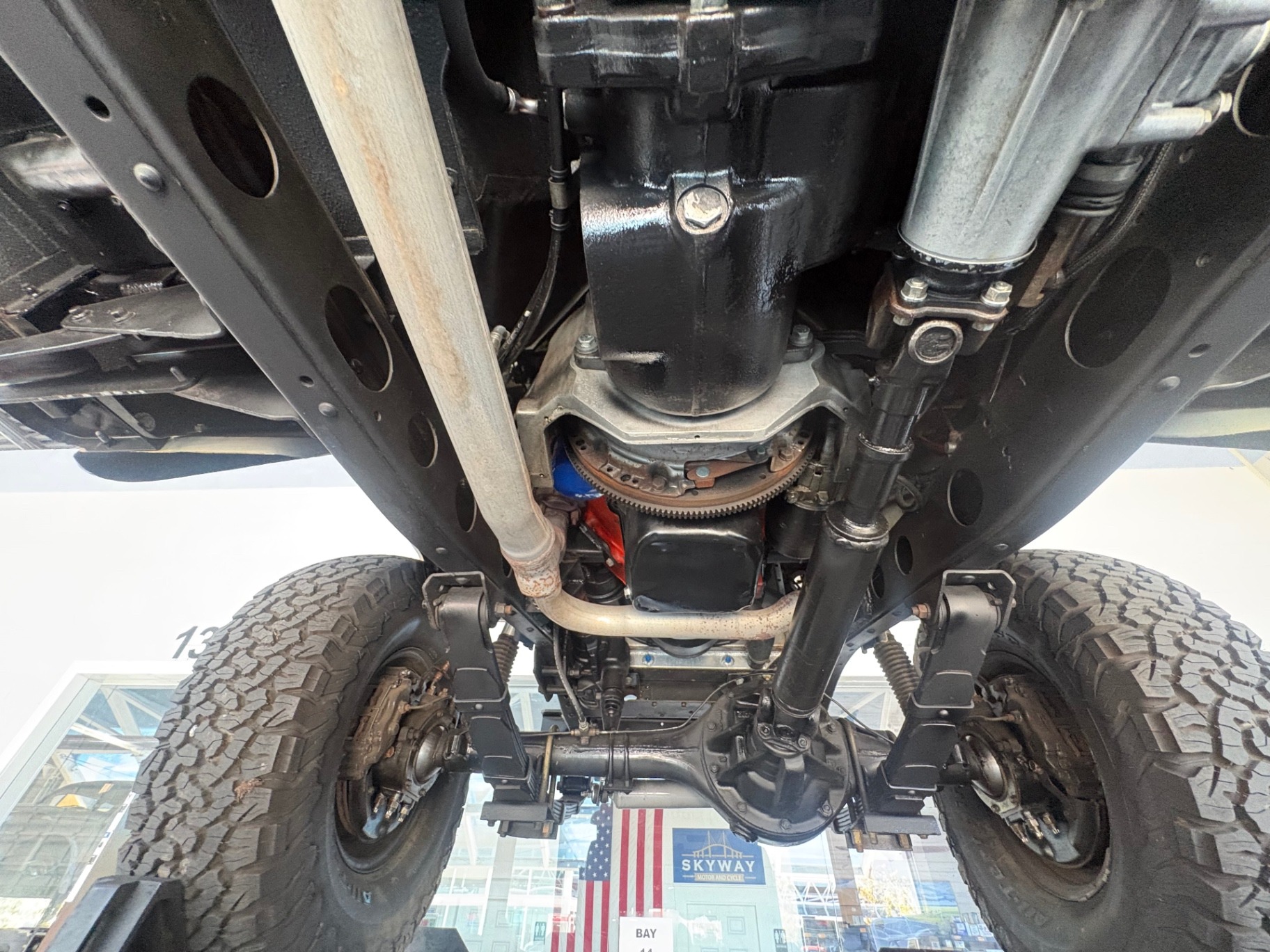
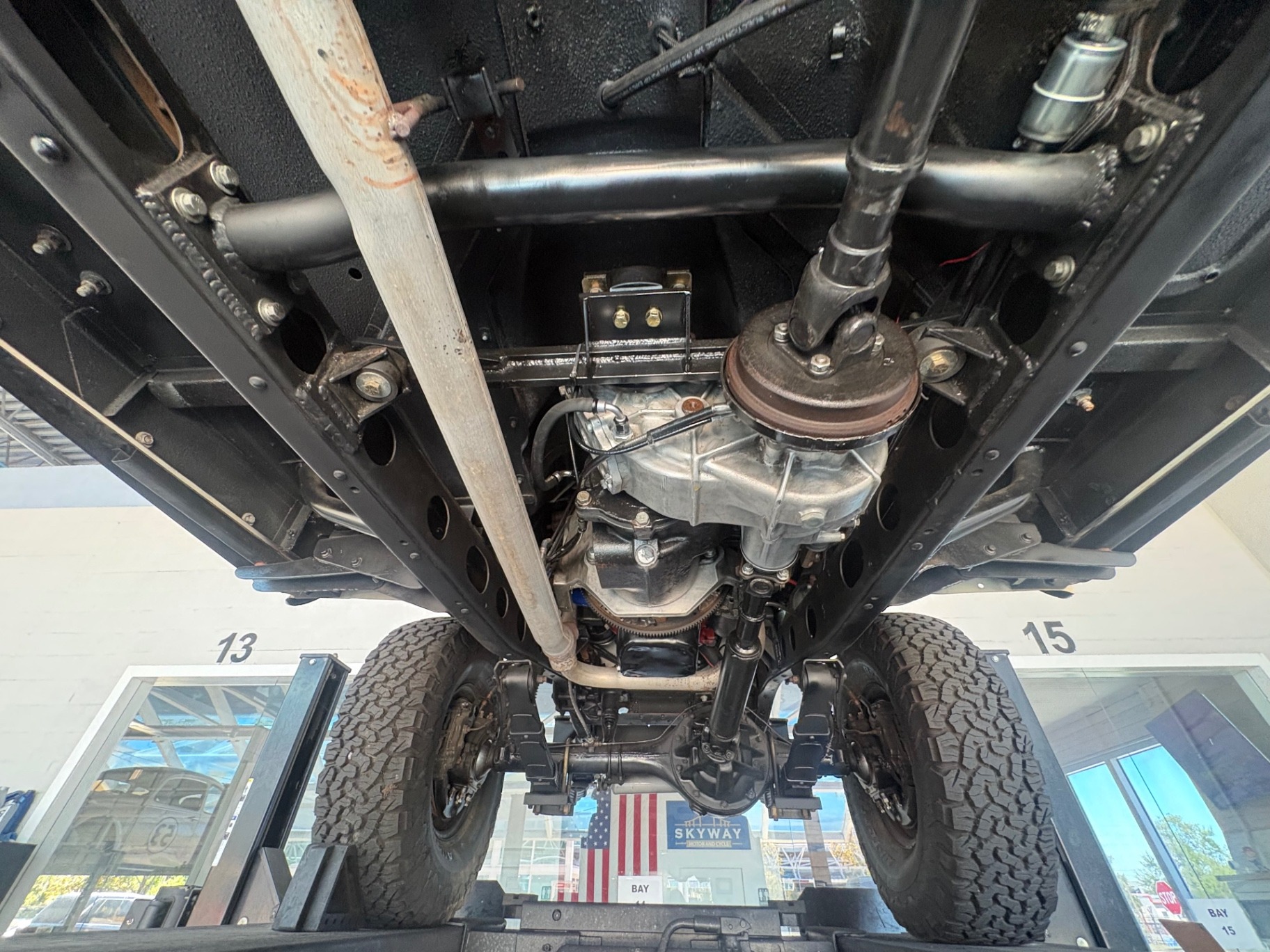
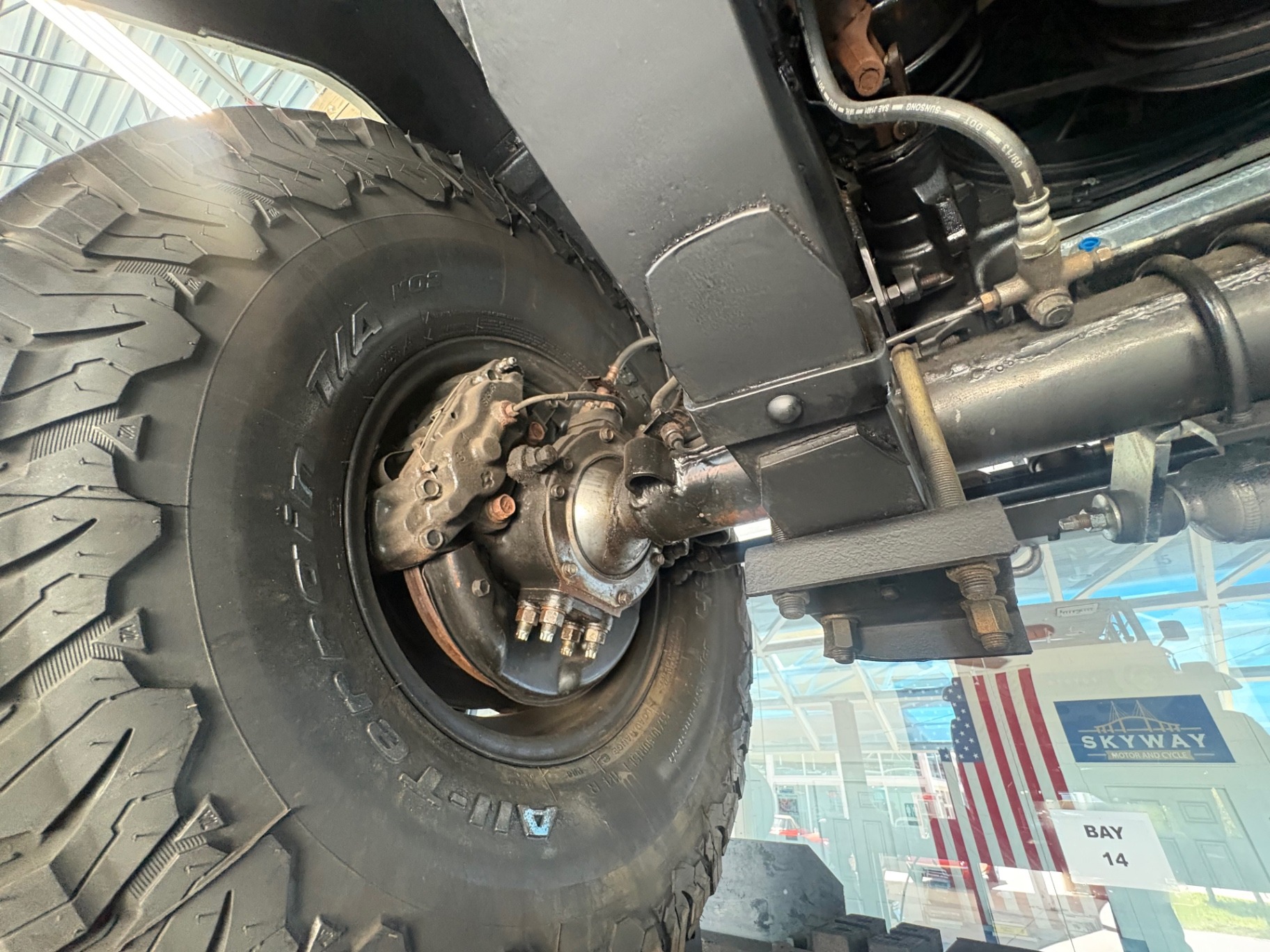
The suspension runs a 2.5-inch lift with Bilstein shocks. Bilstein's monotube design provides more consistent damping than standard twin-tube shocks under repeated compression cycles — relevant whether you are driving washboard dirt roads or corrugated highway. The underside of the truck was coated with Raptor liner during the restoration, providing both corrosion protection and impact resistance for off-road use.
The electrical system was addressed properly during the restoration. Rather than patching the original 50-year-old wiring, the builder installed an updated 1975 Land Cruiser wiring harness and a 12-circuit fuse block. This is the kind of work that rarely gets photographed but significantly affects long-term reliability and the ability to add accessories without burning up circuits.
Interior
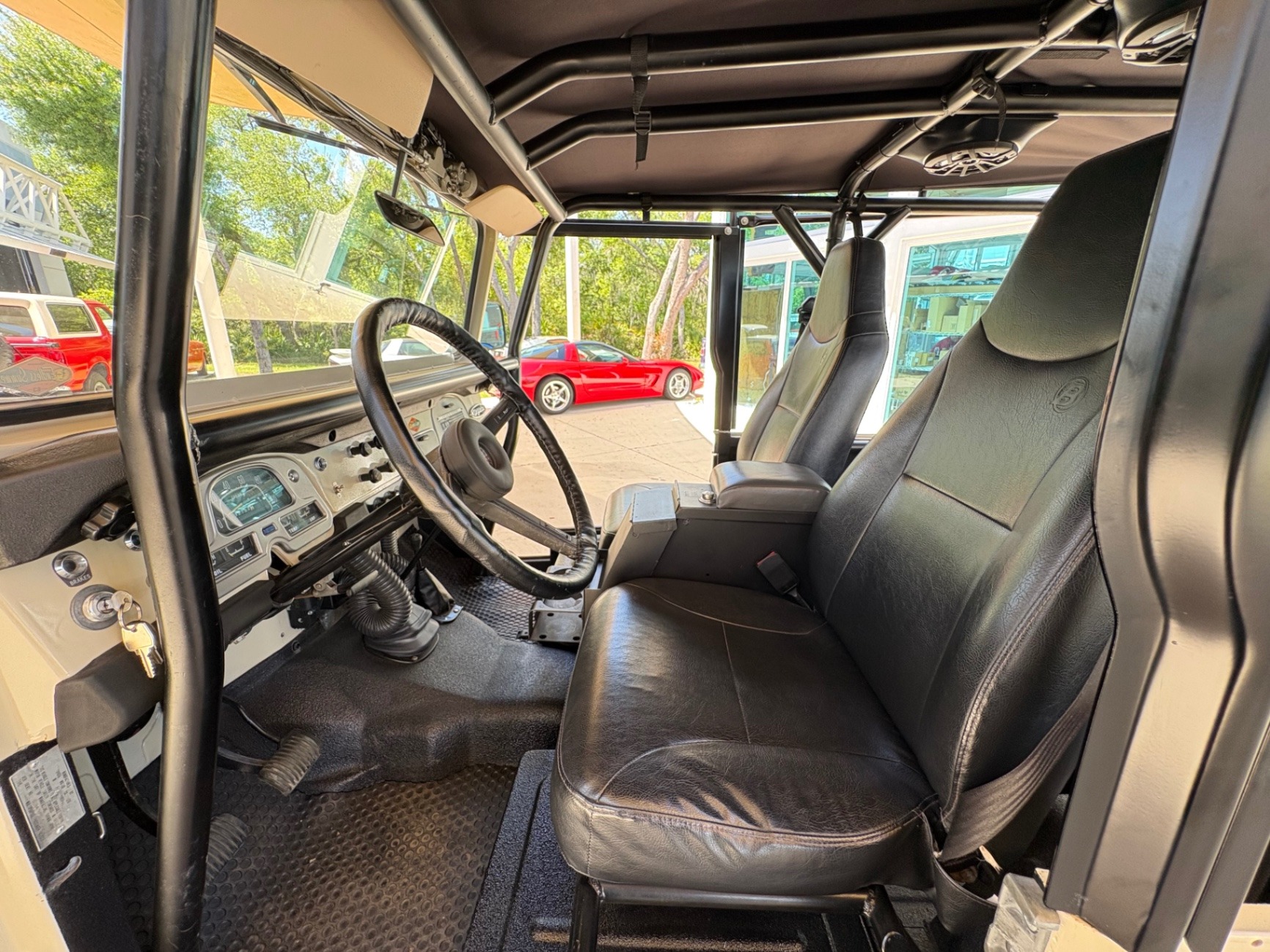
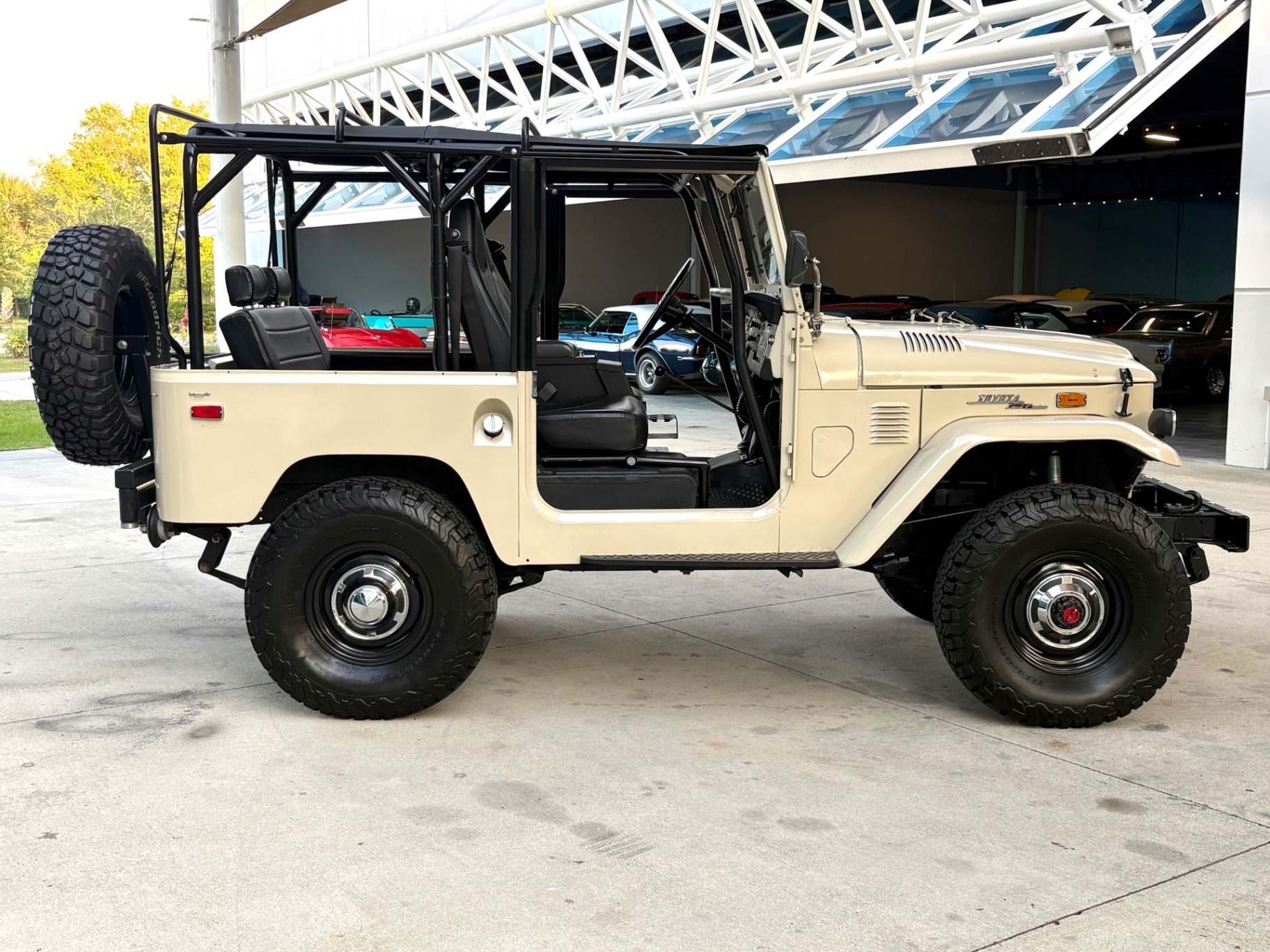
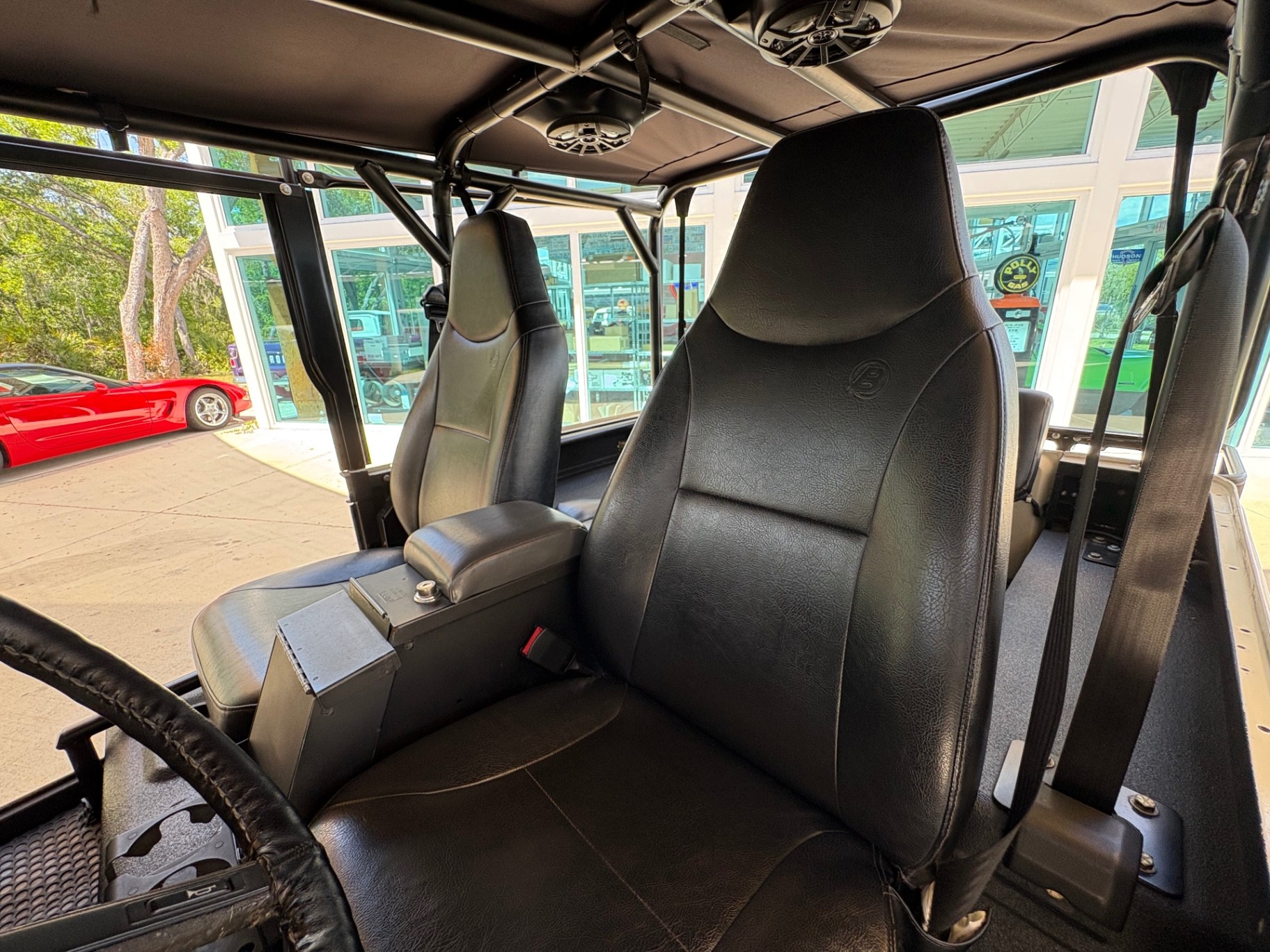
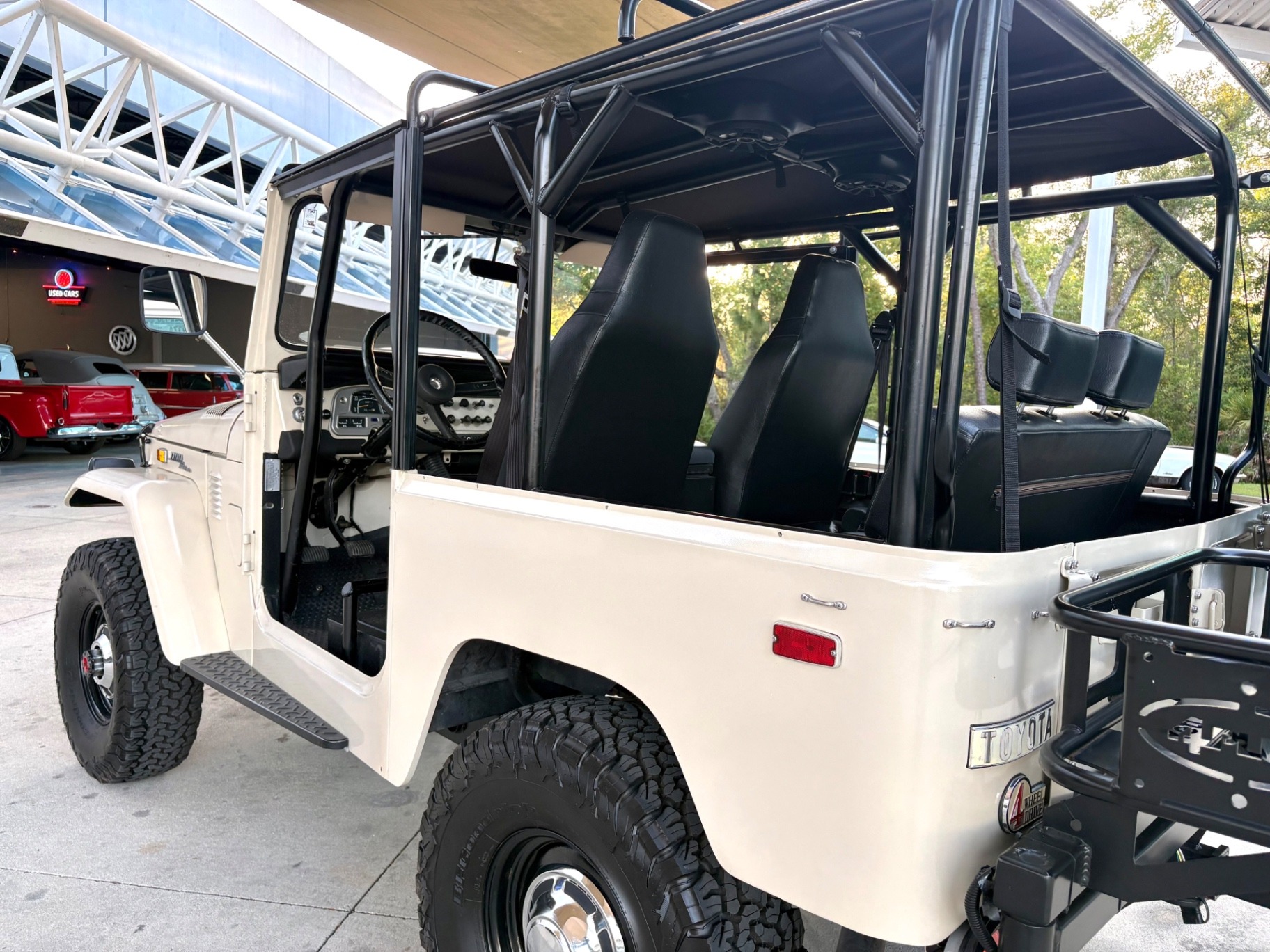
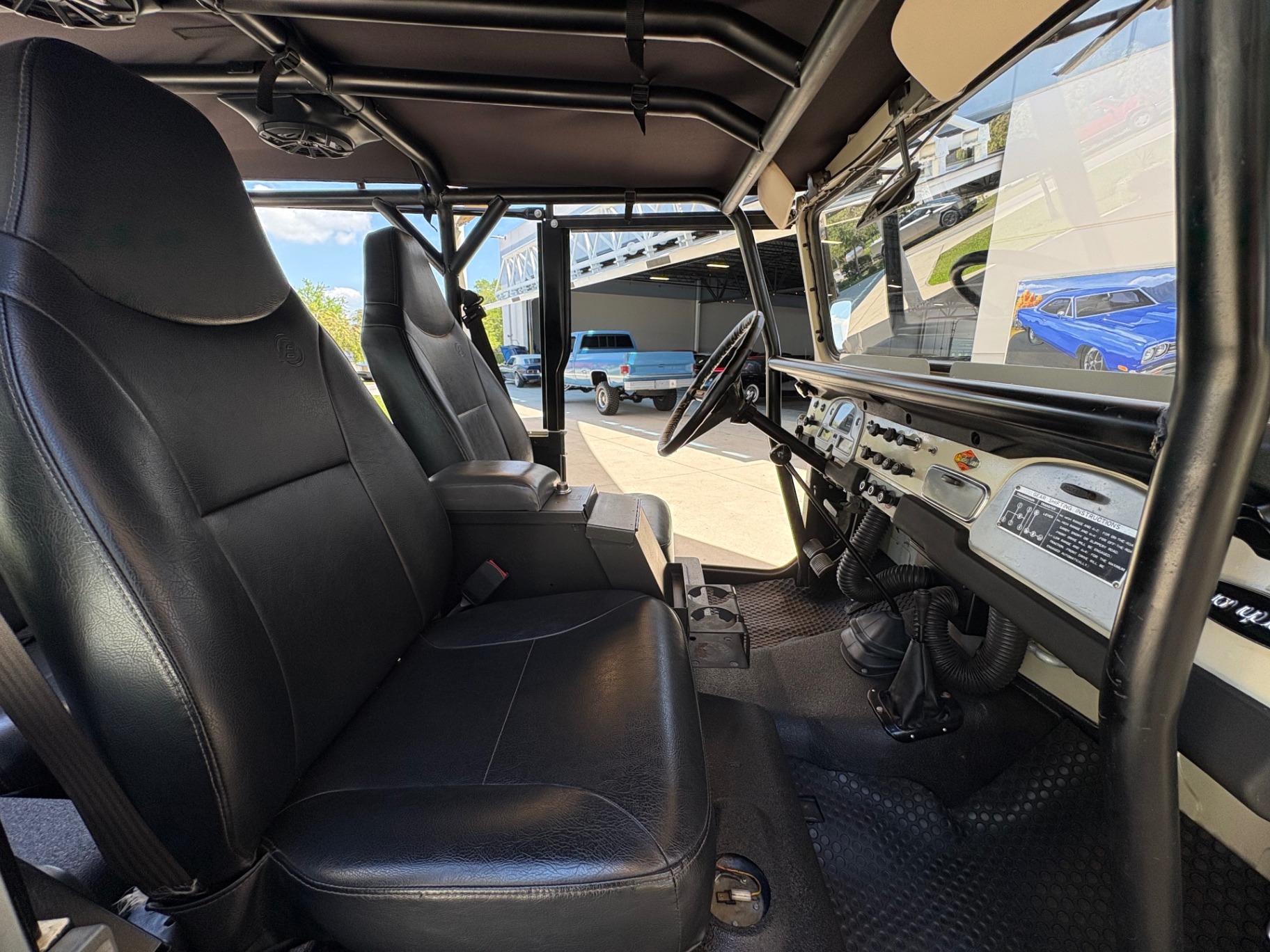
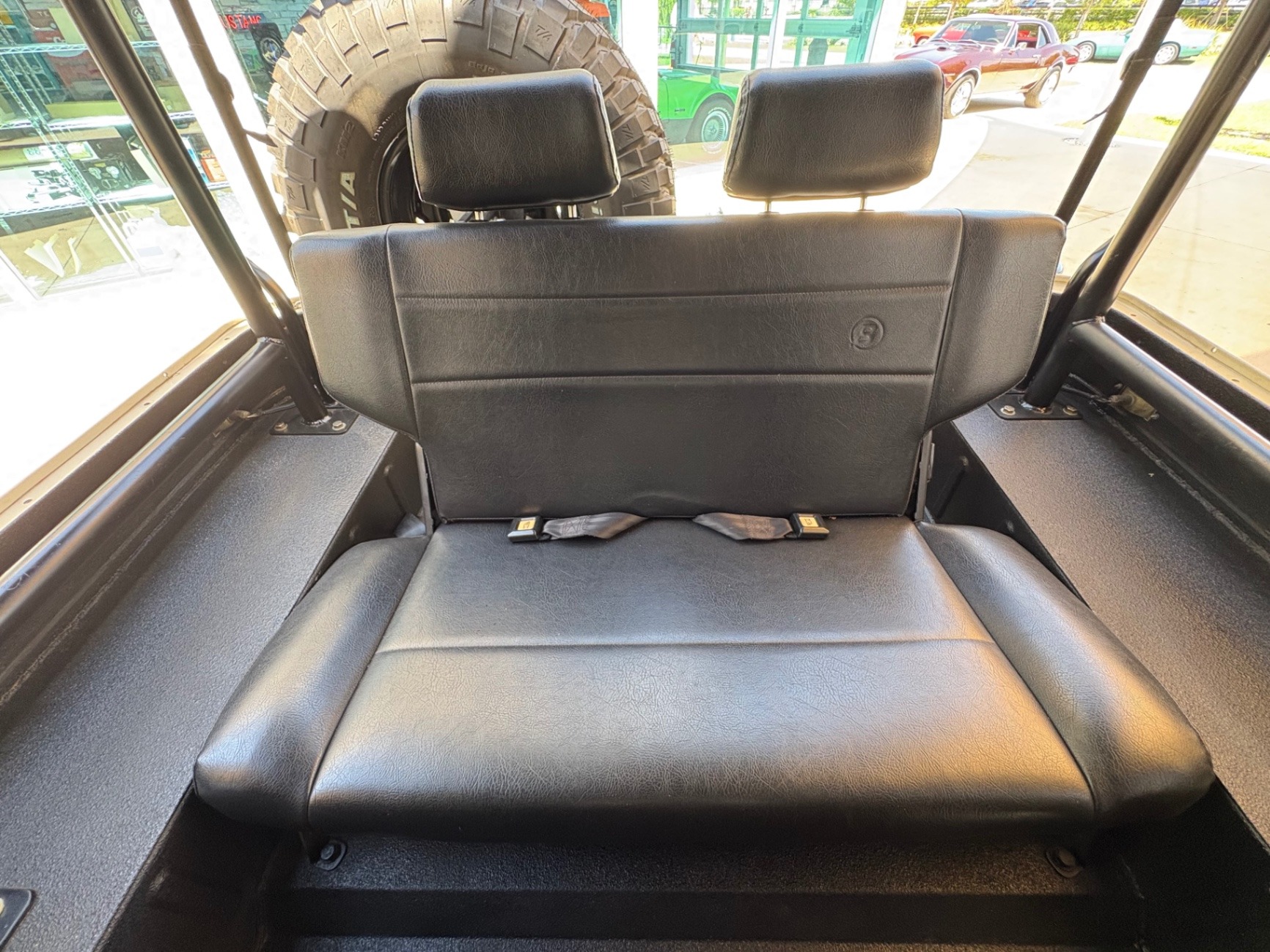
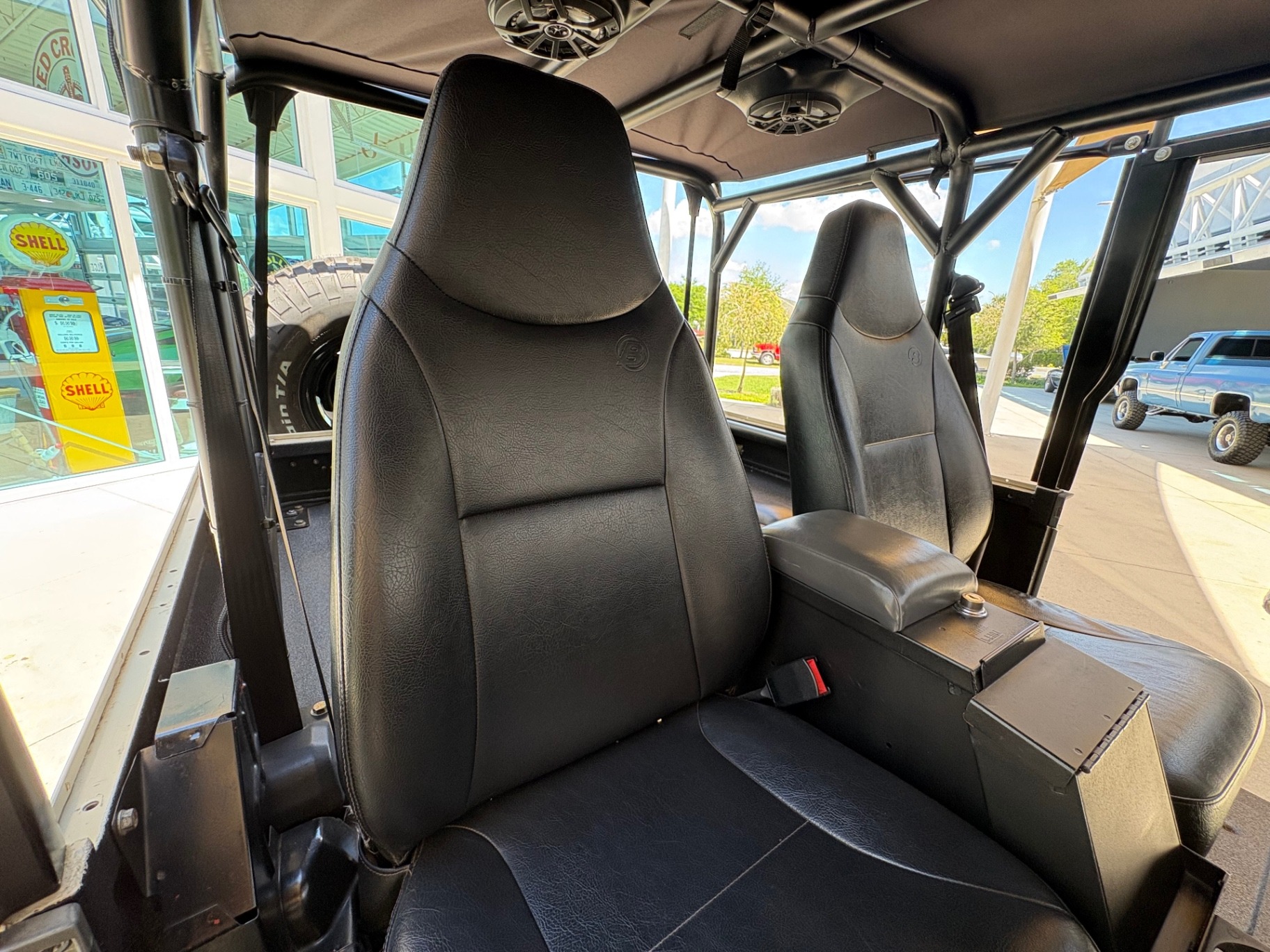
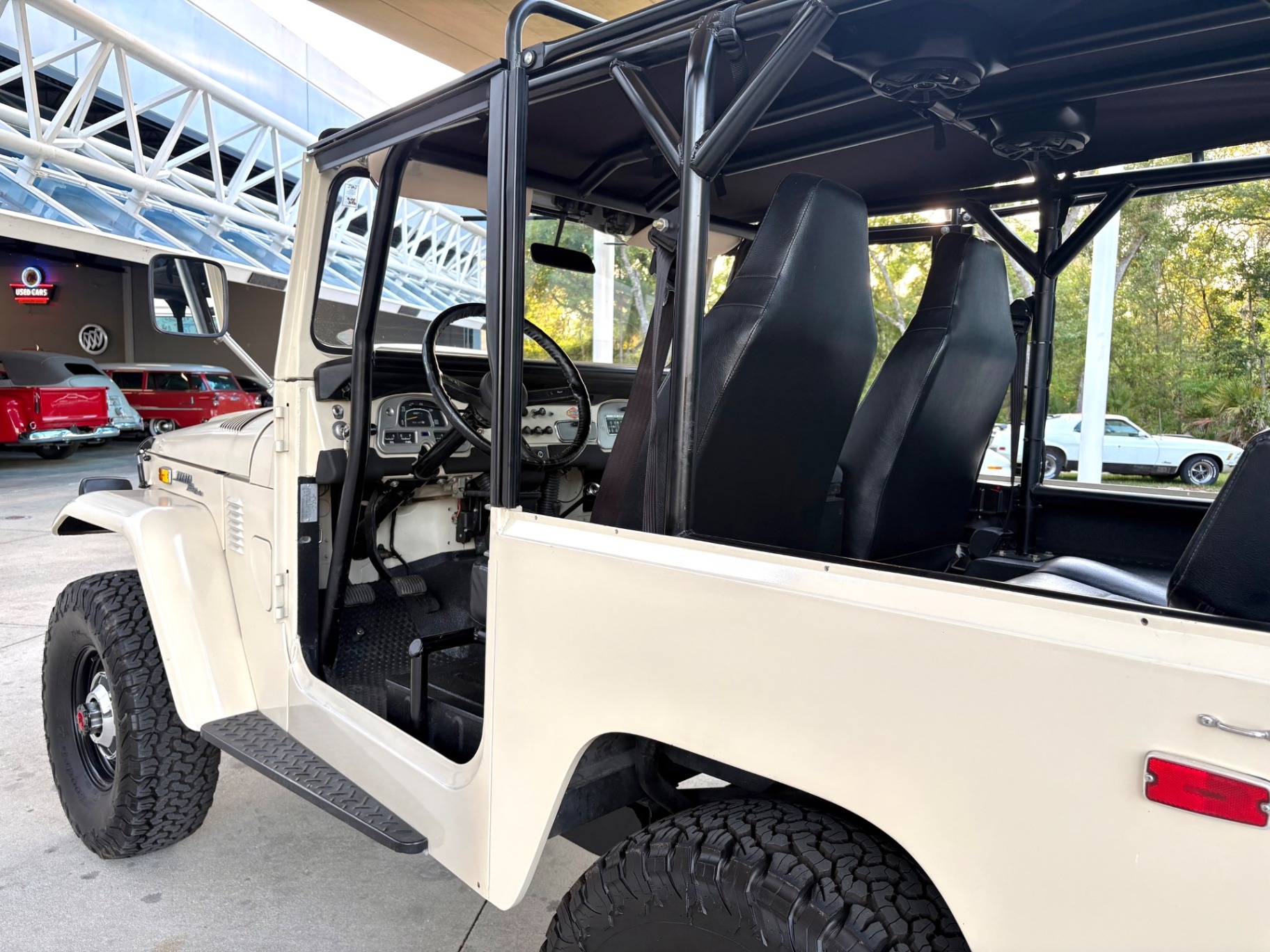
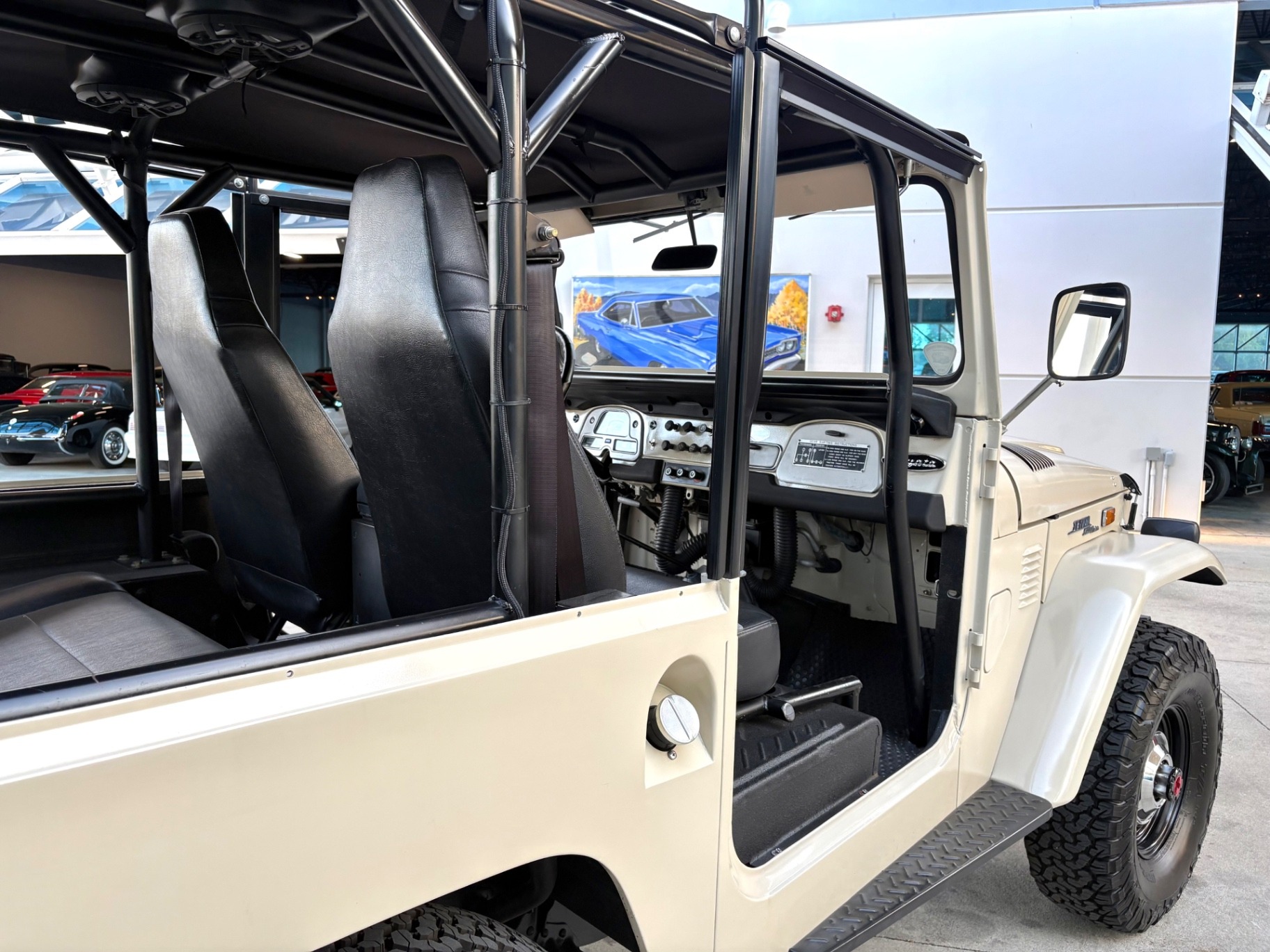
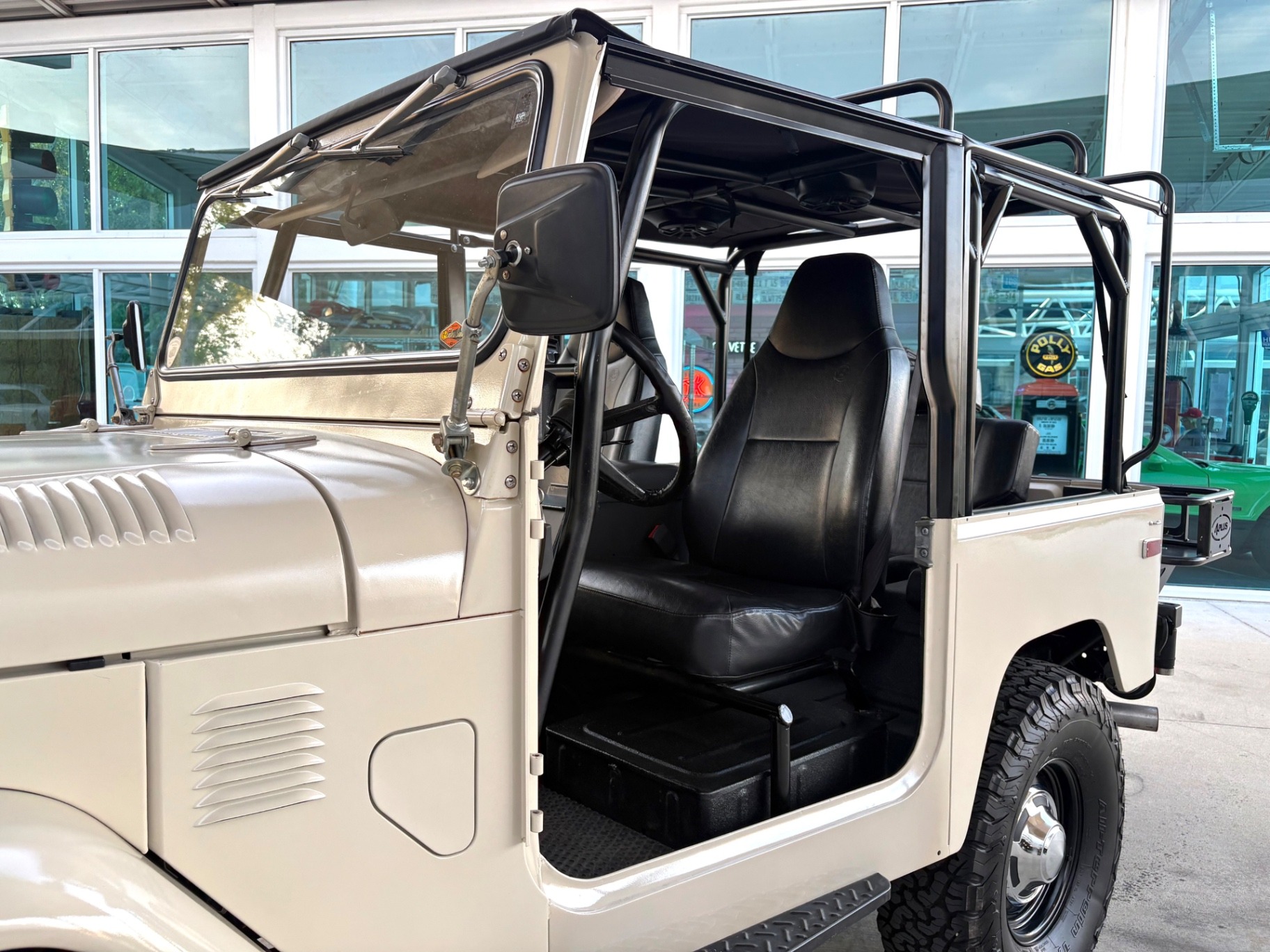
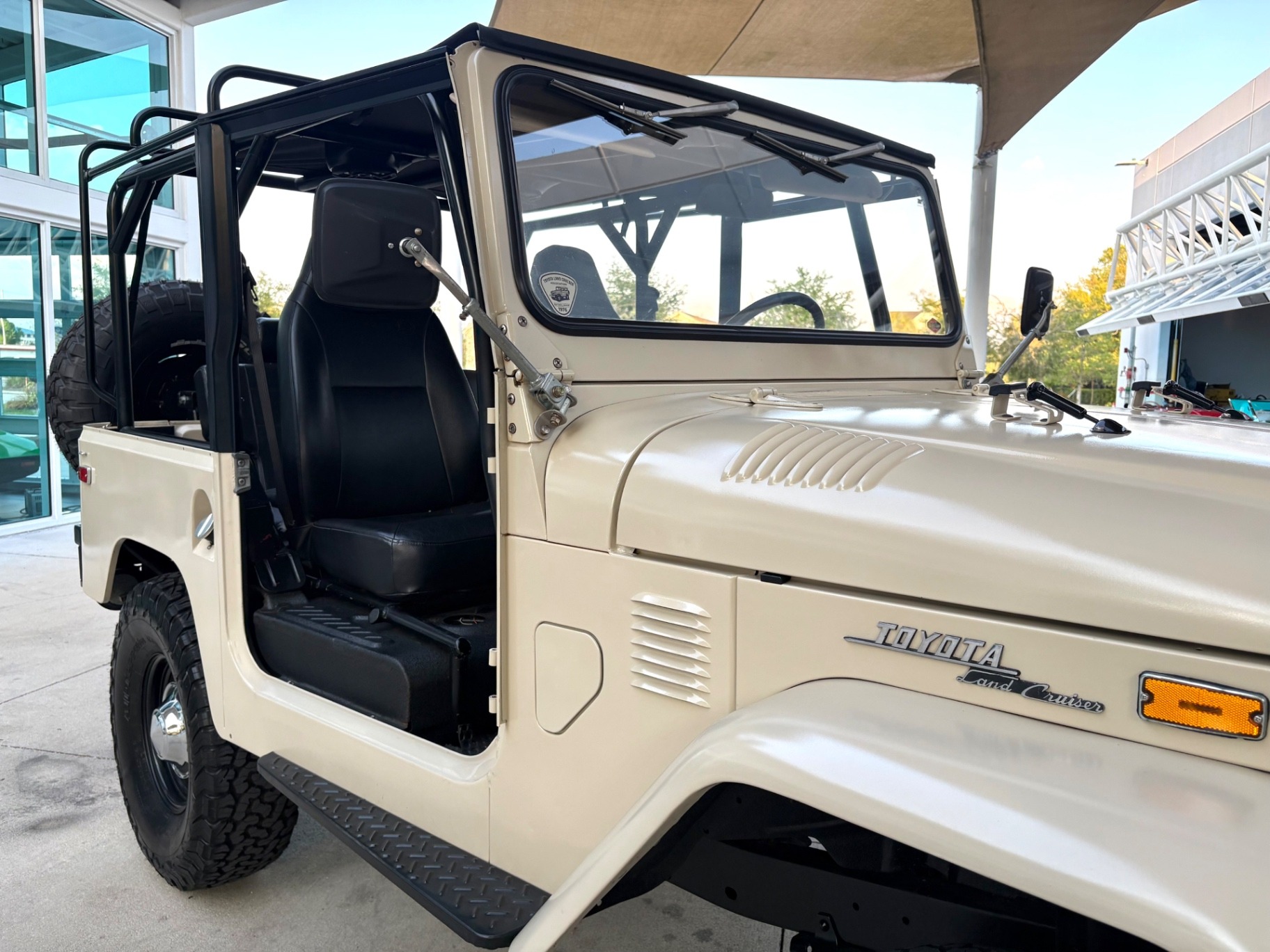
The front bucket seats sit on sliders, which is a practical necessity for getting in and out of an FJ40 comfortably, particularly with the roll cage in place. The seating surfaces are finished in black leather, which holds up well in an open-air vehicle that will see sun and occasional moisture. The rear tumble seats allow the cargo area to be configured for passengers or gear depending on the day. A locking Tuffy center console provides secure storage between the front seats — Tuffy products are built specifically for the off-road market and use steel construction with a keyed lock, not the plastic console bins found in passenger cars.
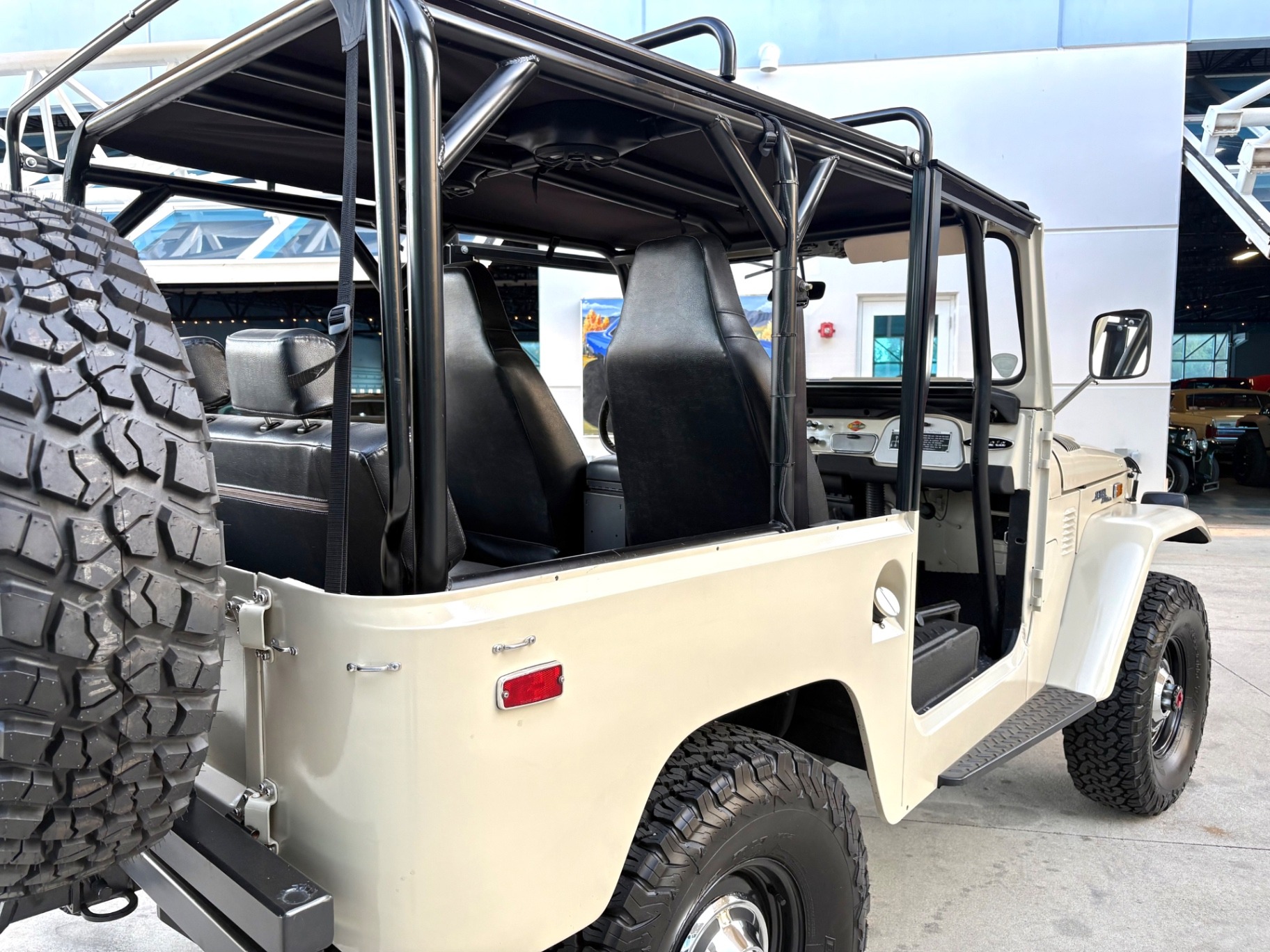
The Red Line LC family roll cage is welded into the structure of the vehicle, not bolted in. Welded ties mean the cage is integrated with the body rather than sitting on top of it, which is the correct approach for a vehicle that could realistically see trail use. The cage also provides the structural rigidity that an open-top FJ40 loses without a hardtop.
Exterior
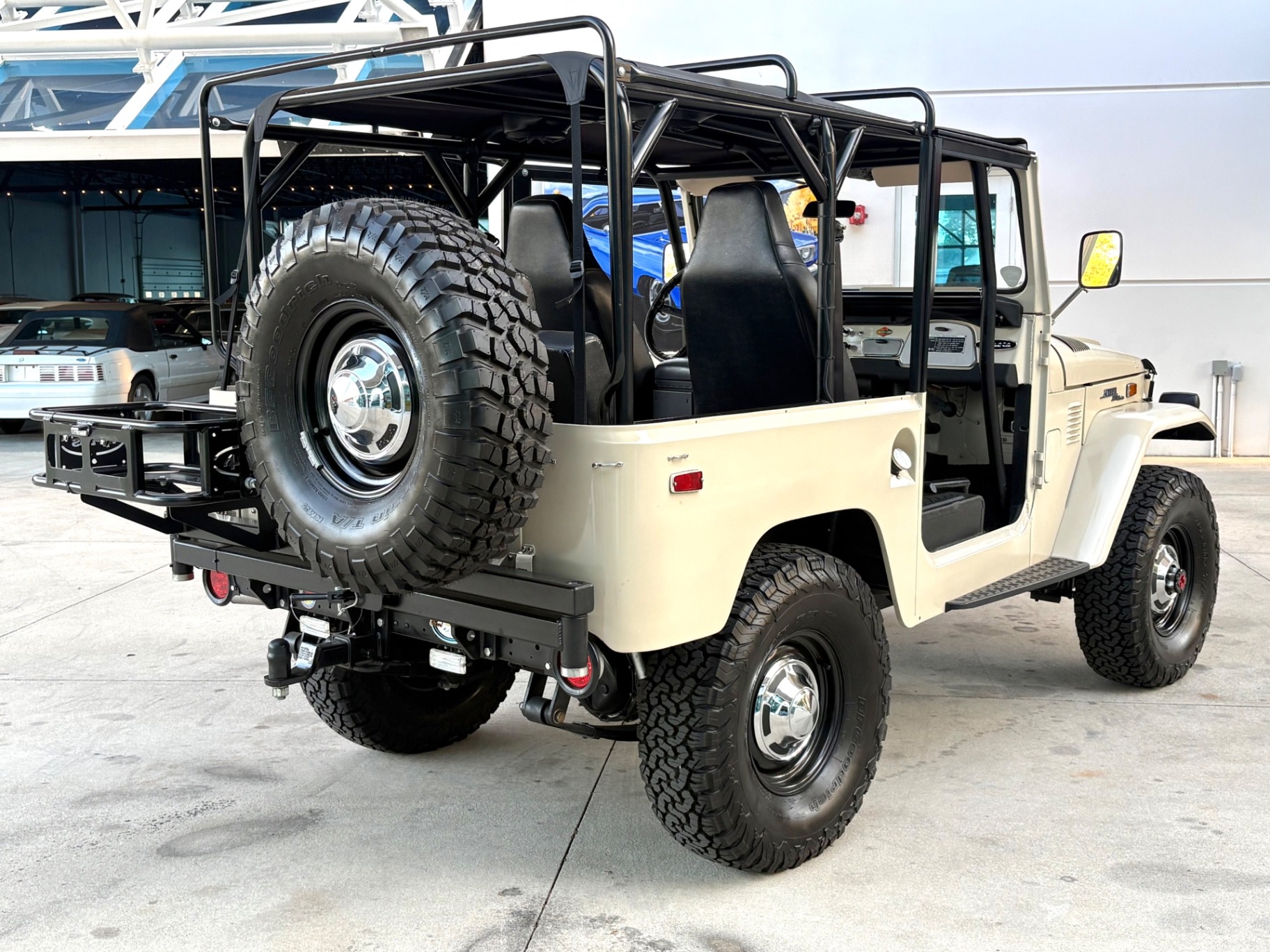
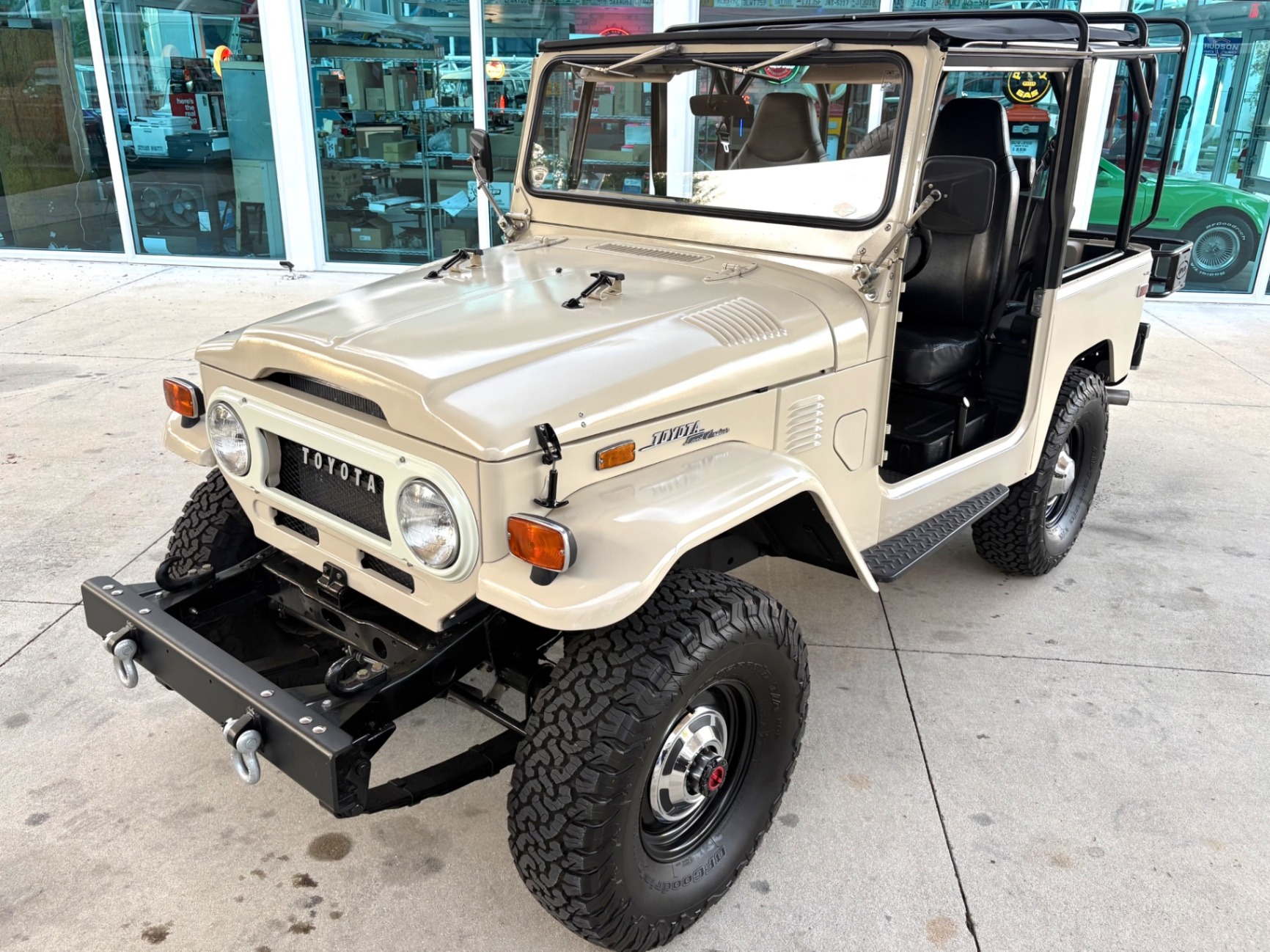
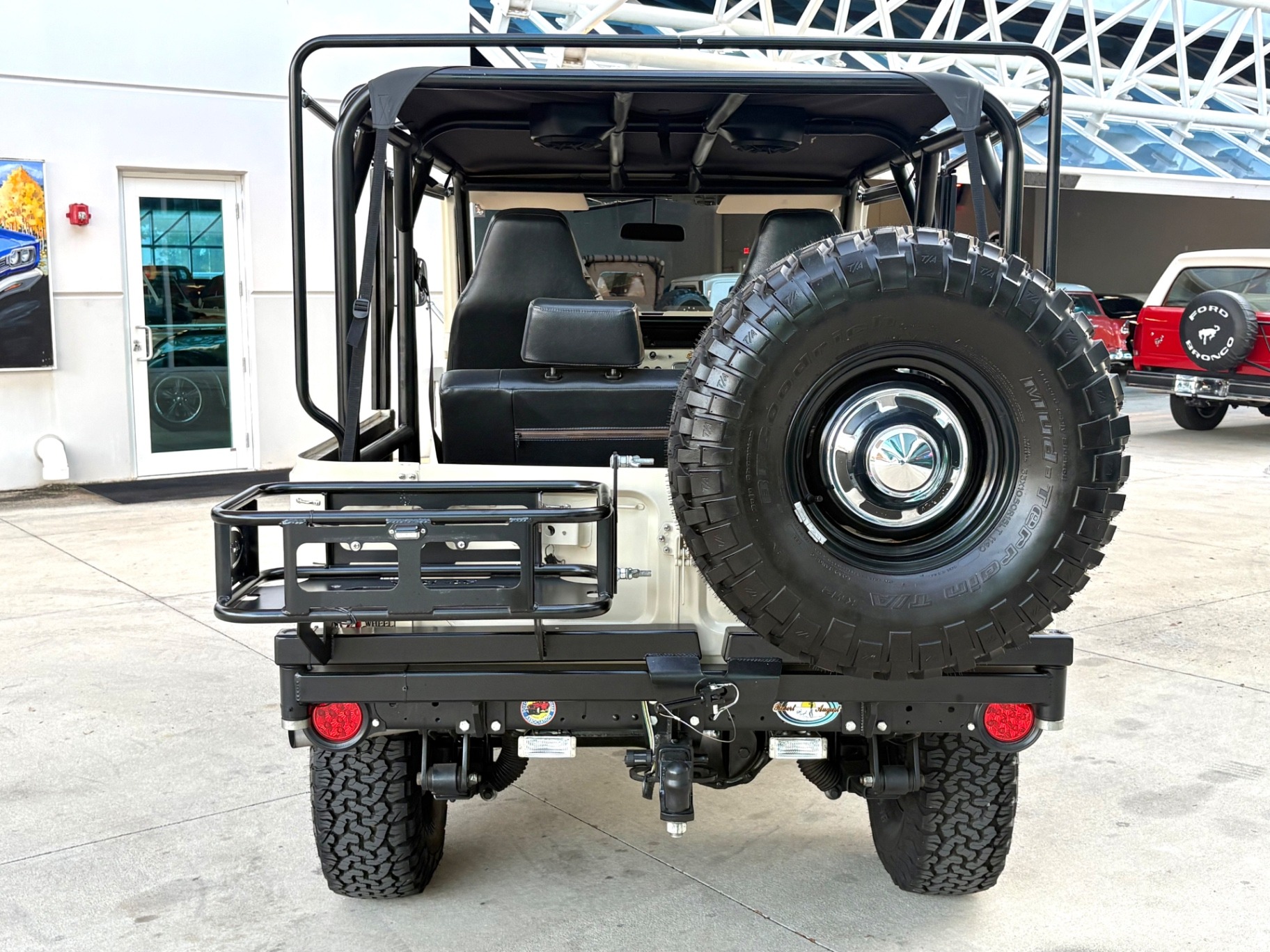
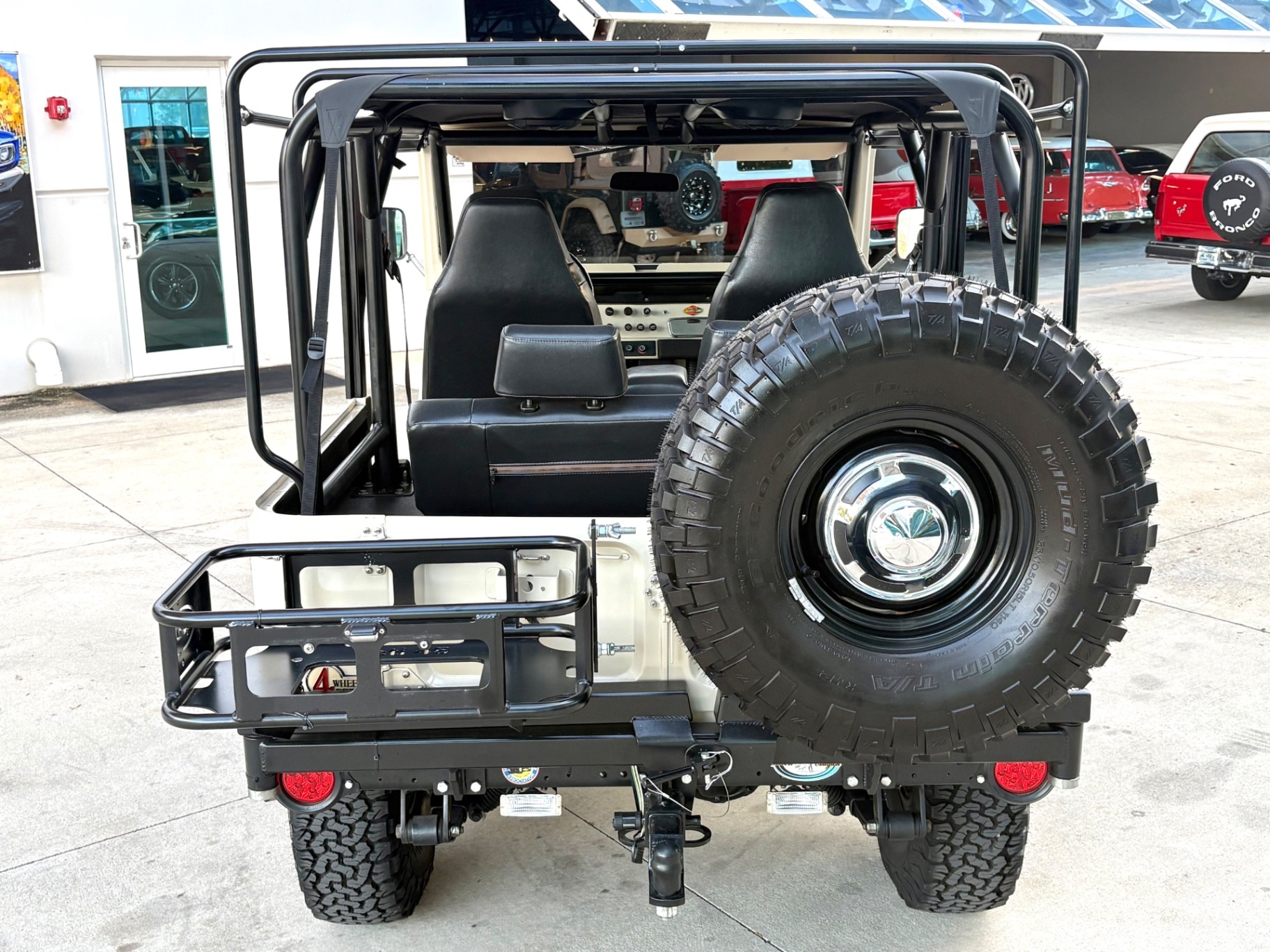
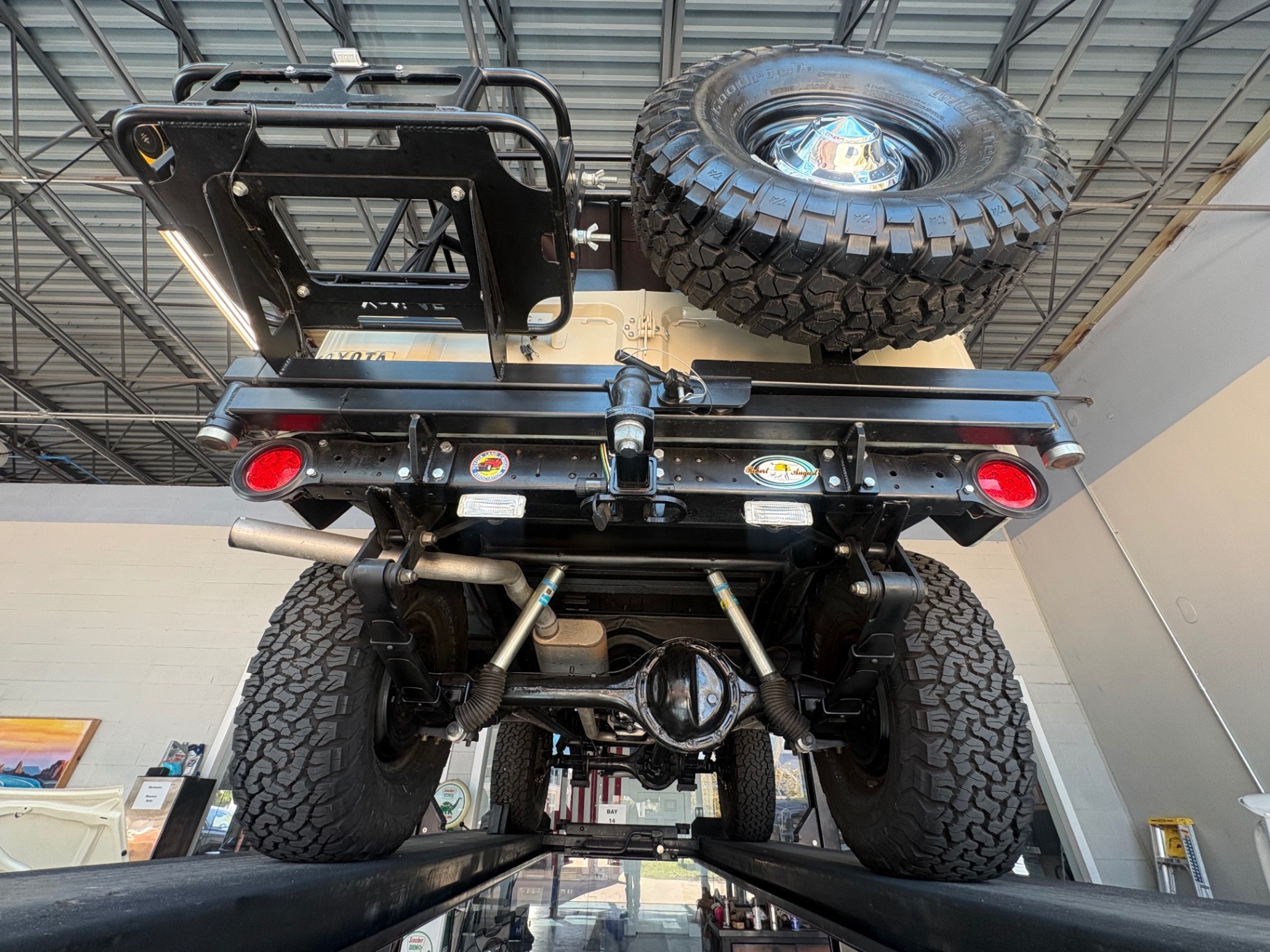
The truck rides on 15-inch steel wheels, a correct and durable choice for this platform. The custom rear bumper integrates dual swing-out tire carriers, which allows for full-size spare coverage without sacrificing interior cargo space. Running two spares is a practical decision for serious trail use, and the swing-out design keeps them accessible without requiring cargo area removal.
Two top configurations are included: a black soft top and a bikini top. The half doors and full metal hard doors give the owner the flexibility to run the vehicle fully open, partially enclosed, or completely closed depending on weather and intended use. The hard doors are primed and ready — they can be painted to match the body or left in primer for a working-truck look.
The underside, visible in the photos, shows clean Raptor liner coverage over what is clearly a well-executed frame-off restoration. The Bilstein shocks are visible at each corner, and the solid axles are in the kind of condition you only achieve by starting from bare metal.
Conclusion
The FJ40 market has strengthened considerably over the past decade as the generation that grew up with them has reached the point of buying back the vehicles they always wanted. Clean, properly built examples at this level are not easy to find, and the work documented in this truck represents a significant investment of time and money by whoever took it on.
To learn more about this 1972 Toyota FJ40 Land Cruiser or to schedule a time to see it in person, call Skyway Classics in Sarasota, Florida at 941-254-6608.
Disclaimer Information found on the website is presented as given to us by the owner of the car, whether on consignment or from the owner we bought it from. Some Photos, materials for videos, descriptions and other information are provided by the consignor/seller and is deemed reliable, but Skyway Classics does not warranty or guarantee this information. Skyway Classics is not responsible for information that may incorrect or a publishing error. The decision to purchase should be based solely on the buyers personal inspection of the vehicle or by a professional inspection service prior to offer or purchase being made.
Contact Seller
You Might Also Like
Similar trucks and 4×4s currently available on Fourbie


Fast & Easy Auto Loans
Fourbie and LightStream have teamed up to provide financing options for your 4x4 purchase.

Secure Pay & Title Transfer
KeySavvy makes it safer and easier to buy and sell cars with secure pay and title transfer.
Partner services are offered by Fourbie Exchange. When you choose to use their services, we may receive a commission at no extra cost to you.
This page contains information provided by the seller. Sellers are required to submit information that is true and correct. We have not independently verified the information or details about any vehicles for sale. By using this page, including inquiring via the form on this page, you accept the terms of our Terms of Use.
Suspect fraud or inaccurate details? Let us know.